

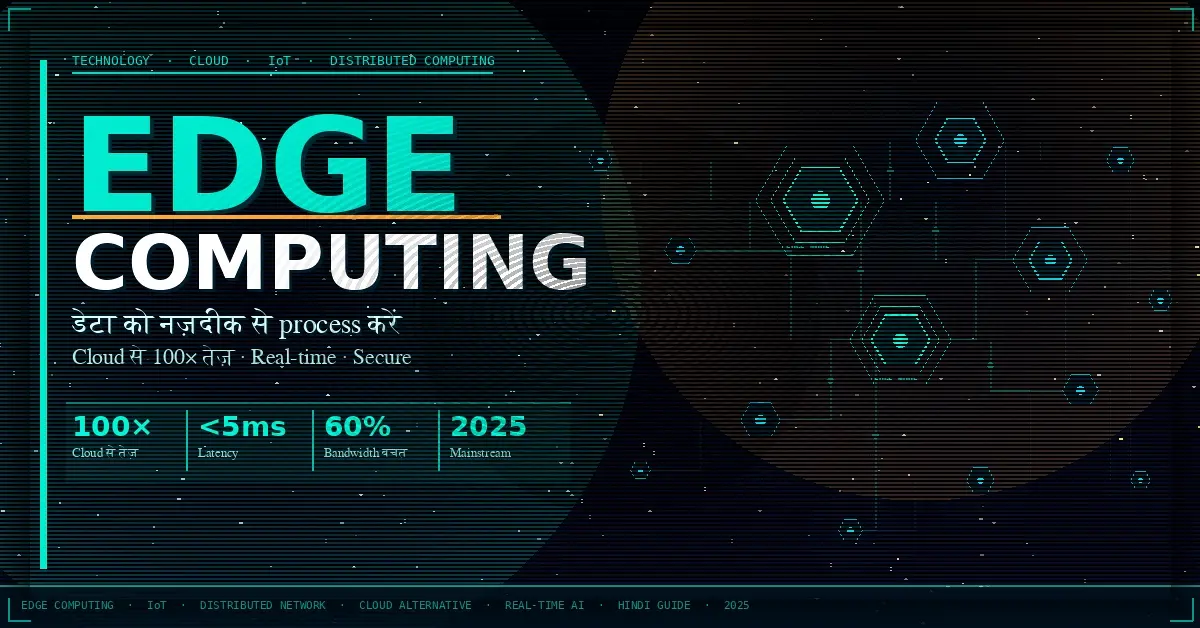
Edge computing आज की digital दुनिया की सबसे ज़रूरी technologies में से एक बन चुकी है। जैसे-जैसे internet of things (IoT), autonomous vehicles, और real-time applications बढ़ रहे हैं, वैसे-वैसे data को तेज़ी से process करने की ज़रूरत भी बढ़ रही है।
पहले हम सारा data cloud servers पर भेजते थे जो दूर किसी data center में होते थे। लेकिन इससे delay होता था — इसे latency कहते हैं। Edge computing इस problem को solve करता है। यह data को उसी जगह process करता है जहाँ वह generate होता है — यानी device के पास, network के ‘edge’ पर।
सोचिए अगर आपकी self-driving car को हर decision के लिए 1000 km दूर server से जवाब माँगना पड़े — तो क्या होगा? यही problem edge computing solve करती है। यह technology 5G, AI, और IoT के साथ मिलकर एक ऐसी दुनिया बना रही है जहाँ machines real-time में सोच और react कर सकें।
इस article में हम edge computing को हर पहलू से समझेंगे — इसकी परिभाषा, इतिहास, काम करने का तरीका, फायदे, सीमाएँ और भविष्य। चलिए शुरू करते हैं!
Edge Computing क्या है?
Edge computing एक distributed computing paradigm है जिसमें data processing, storage और computation को end-user के device या data source के करीब perform किया जाता है — बजाय किसी centralized cloud data center के।
सरल भाषा में: मान लीजिए आपका घर एक factory है। पहले के तरीके में हर छोटा decision लेने के लिए आपको अपने boss को — जो 500 km दूर है — phone करना पड़ता था। Edge computing में आपके घर में ही एक smart manager है जो छोटे-बड़े decisions खुद ले सकता है।
सरल भाषा मे ‘Edge’ का मतलब है network का किनारा — यानी वह जगह जहाँ user का device internet से connect होता है। यह edge server, IoT gateway, router, या कोई भी local computing device हो सकती है।
Edge Computing के मुख्य तत्व
- Edge Devices: Sensors, cameras, smartphones, industrial machines
- Edge Servers/Nodes: Local servers जो data process करते हैं
- Edge Gateway: Device और cloud के बीच bridge
- Cloud: Long-term storage और complex analytics के लिए
- Network: 5G, Wi-Fi, LTE — connectivity layer
Edge Computing की उत्पत्ति और इतिहास
कहाँ से शुरू हुई यह technology?
Edge computing की नींव 1990s में रखी गई थी जब Akamai Technologies ने Content Delivery Networks (CDN) introduce किए। CDN में content को geographically distributed servers पर store किया जाता था ताकि users को faster access मिले — यही edge computing का basic idea था।
Timeline of Edge Computing:
- 1997: Akamai ने CDN की concept introduce की — edge computing की शुरुआत
- 2009: Cloudlet concept — Mahadev Satyanarayana (Carnegie Mellon) ने edge computing formally define किया
- 2012-14: IoT boom के साथ edge computing की ज़रूरत बढ़ी
- 2016: ETSI (European Telecom Standards Institute) ने Multi-access Edge Computing (MEC) standard बनाया
- 2018: Linux Foundation ने LF Edge project launch किया
- 2019-20: 5G के rollout के साथ edge सिस्टम mainstream बनी
- 2021-24: AWS Outposts, Microsoft Azure Edge Zones, Google Distributed Cloud launch
- 2025+: AI + Edge का integration — Agentic Edge AI का दौर
Key Pioneers: Mahadev Satyanarayana (Cloudlet), Weisong Shi (Edge Computing formal definition, 2016), और ETSI MEC working group।
Linux Foundation LF Edge प्रोजेक्ट को यहाँ देख सकते हैं। LF Edge project
Edge Technology कैसे काम करता है?
Technical Explanation
Traditional cloud computing में data का सफर कुछ ऐसा होता है: Device → Internet → Cloud Data Center → Process → वापस Device। इस पूरे process में कई milliseconds से लेकर seconds तक का समय लग सकता है।
Edge Technology में यही process बदल जाती है: Device → Nearby Edge Node → Process → Device। Cloud तब involve होता है जब long-term storage या complex AI processing की ज़रूरत हो।
Step-by-Step Process
- Step 1 — Data Generation: IoT sensor, camera, या device data generate करता है
- Step 2 — Local Filtering: Edge device पहले unnecessary data filter करता है
- Step 3 — Edge Processing: Critical data को nearby edge server पर process किया जाता है
- Step 4 — Real-time Action: Processed result तुरंत device को मिलता है (ms में)
- Step 5 — Cloud Sync: Important aggregated data cloud को भेजा जाता है analytics के लिए
यहा ETSI के MEC standards के बारे में official documentation ETSI MEC standards
Edge vs Cloud vs Fog सिस्टम
Cloud Computing: Centralized, दूर के data centers में processing — High latency, unlimited scalability
Edge कम्प्यूटिंग : Device के पास processing — Ultra-low latency, limited resources
Fog कम्प्यूटिंग : Edge और Cloud के बीच की layer — Cisco द्वारा coined, intermediate processing
इस सिस्टम मे कुल तीन layers होती हैं: Device Layer (sensors/machines), Edge Layer (local servers/gateways), और Cloud Layer (central data centers)। यह three-tier architecture ही इस computing सिस्टम को powerful बनाती है।
Edge System के प्रमुख उपयोग (Key Use Cases)
यह computing आज कई industries में use हो रही है:
Healthcare (स्वास्थ्य सेवा)
- Remote patient monitoring — real-time vital signs tracking
- Medical imaging AI — X-ray/MRI analysis locally
- Emergency response systems — instant alerts
Manufacturing (उद्योग)
- Predictive maintenance — machines खुद बताएं कब repair चाहिए
- Quality control — production line पर real-time defect detection
- Robotic automation — edge AI से faster robot decisions
Transportation (यातायात)
- Autonomous vehicles — real-time obstacle detection
- Smart traffic management — traffic signals का automatic control
- Fleet management — vehicles की real-time tracking
Retail (खुदरा व्यापार)
- Cashierless stores — Amazon Go जैसे stores
- Inventory management — real-time stock tracking
- Customer behavior analytics — in-store AI cameras
Agriculture (कृषि)
- Precision farming — soil sensors से real-time data
- Drone monitoring — crop health analysis
- Irrigation automation — weather + soil data से smart watering
Smart Cities
- Smart surveillance — local video processing
- Energy management — smart grid optimization
- Waste management — IoT-enabled smart bins
Edge कम्प्यूटिंग के फायदे (Benefits)
1. Ultra-Low Latency (बहुत कम देरी)
यह कम्प्यूटिंग की सबसे बड़ी ताकत है इसकी speed। Cloud के मुकाबले edge computing 10x से 100x कम latency provide करती है। Cloud processing में 50-100ms तक का time लग सकता है, जबकि edge पर यह 1-5ms में हो जाता है। यह autonomous vehicles, industrial robots, और remote surgery जैसे critical applications के लिए जानलेवा ज़रूरी है।
2. Bandwidth की बचत
अगर हर IoT device का data cloud को भेजा जाए, तो network पर भारी load पड़ेगा। Edge computing local filtering करके केवल important data cloud को भेजती है — इससे bandwidth का 40-60% तक बचत हो सकती है।
3. बेहतर Privacy और Security
Sensitive data को cloud पर भेजने की बजाय locally process करने से data breach का खतरा कम होता है। Medical records, financial data, और personal information locally रह सकते हैं जिससे privacy बेहतर होती है।
4. Offline Functionality
Edge devices internet connection के बिना भी काम कर सकते हैं। Factory में अगर internet down हो जाए, तो edge-enabled machines अपना काम जारी रख सकती हैं। यह reliability critical industries के लिए बेहद ज़रूरी है।
5. Cost Efficiency
Cloud data transfer और storage महंगा पड़ता है। Edge पर data filter करके केवल valuable data cloud को भेजने से cloud costs में significant reduction आती है। बड़े enterprises के लिए यह लाखों रुपये की बचत हो सकती है।
6. Scalability
इसमे Edge nodes को आसानी से add किया जा सकता है। जैसे-जैसे IoT devices बढ़ें, edge infrastructure को modularly expand किया जा सकता है बिना central cloud को overload किए।
Edge Computing की सीमाएँ (Limitations)
Edge computing के फायदों के साथ-साथ कुछ real challenges भी हैं जिन्हें neutral perspective से समझना ज़रूरी है:
- Infrastructure Cost: Edge nodes और servers को deploy करना और maintain करना महंगा है — खासकर remote या geographically distributed locations में
- Limited Computing Power: Edge devices में cloud के मुकाबले limited processing power और storage होती है, जो complex AI workloads के लिए insufficient हो सकती है
- Management Complexity: Hundreds या thousands of edge nodes को manage करना technically challenging है — centralized cloud के मुकाबले operations ज़्यादा complex हैं
- Security Vulnerabilities: Physical edge devices को tamper किया जा सकता है। Distributed nature से attack surface बढ़ जाता है
- Standardization की कमी: अभी तक कोई universal edge computing standard नहीं है — different vendors के solutions interoperable नहीं हैं
- Skilled Workforce की कमी: Edge computing के लिए specialized skills चाहिए जो अभी बहुत कम professionals में हैं
- Hardware Maintenance: Remote edge hardware का maintenance और upgrade करना difficult और costly है
नैतिक मुद्दे (Ethical Concerns)
Data Privacy और Surveillance
Edge cameras और sensors हर जगह deploy होने से mass surveillance का खतरा बढ़ता है। Smart city cameras जो locally video process करें — वे किसके लिए data store करें? इसके लिए strong legal frameworks और transparency ज़रूरी हैं।
Data Ownership
Edge device पर generate होने वाले data का मालिक कौन है — user, device manufacturer, या service provider? यह question अभी legally और ethically unclear है। GDPR जैसे regulations edge computing पर apply कैसे होंगे, यह actively debate हो रहा है।
Digital Divide
Edge infrastructure का deployment primarily urban और developed areas में होता है। Rural और underdeveloped regions को edge computing के benefits late मिलेंगे — इससे existing digital divide और बढ़ सकती है।
Algorithmic Bias
Edge AI models अगर biased training data पर trained हों, तो real-time decisions में भी bias आएगा। उदाहरण: facial recognition edge cameras अगर certain demographics के लिए less accurate हों।
Environmental Impact
Millions of edge devices deploy होने से electronic waste और energy consumption बढ़ेगी। हालाँकि per-data-unit energy consumption कम होगी, लेकिन overall scale का net environmental impact carefully analyze करना ज़रूरी है।
Edge Computing की कीमत और उपलब्धता
Global Market Size
Global edge computing market 2024 में approximately $61 billion था और 2030 तक $380+ billion तक पहुँचने का अनुमान है — यानी लगभग 35%+ CAGR।
Major Players और Pricing
- AWS Outposts: $5,000–$50,000+ per rack — on-premises edge AWS infrastructure
- Microsoft Azure Edge Zones: Pay-as-you-go pricing, enterprise contracts
- Google Distributed Cloud: Hardware + software subscription model
- Dell EMC Edge: $2,000–$15,000+ per node
- HPE Edgeline: $3,000–$20,000 per server
- Open-source: EdgeX Foundry, KubeEdge — free but requires technical expertise
India में Edge Computing
भारत में edge computing adoption तेज़ी से बढ़ रहा है। Reliance Jio, Airtel, और BSNL 5G के साथ edge capabilities deploy कर रहे हैं। Smart Cities Mission और Digital India के तहत edge infrastructure investments बढ़ रहे हैं। Tier-1 cities (Mumbai, Bengaluru, Delhi, Hyderabad) में edge nodes पहले से deploy हो रहे हैं।
Edge Computing के विकल्प (Alternatives)
Edge computing एकमात्र solution नहीं है — use case के हिसाब से ये alternatives बेहतर हो सकते हैं:
- Cloud Computing (AWS, Azure, GCP): जब latency critical न हो और unlimited scalability चाहिए — best for batch processing, ML training, और analytics
- Fog Computing: Edge और cloud के बीच intermediate layer — जब hierarchical processing चाहिए
- Multi-access Edge Computing (MEC): Telecom operators द्वारा provide किया जाता है — 5G networks में built-in edge
- On-Premises Data Centers: जब सारा data physically secure रखना हो — banking और defense sectors के लिए
- Hybrid Cloud: Cloud + On-premises का combination — flexible और scalable
- CDN (Content Delivery Networks): Static content delivery के लिए — Cloudflare, Akamai — low-cost edge alternative
- Micro Data Centers: Modular, containerized data centers जो edge locations पर deploy होते हैं
नवीनतम अपडेट (Latest Updates 2024–2025)
- AI + Edge Convergence: NVIDIA ने Edge AI platforms (Jetson series) के नए versions launch किए — on-device AI inference का नया era
- 5G Edge: Global 5G rollout के साथ Mobile Edge Computing (MEC) mainstream हो रहा है — Ericsson और Nokia leading
- AWS Wavelength: Telecom partners के साथ ultra-low latency edge zones expand हो रहे हैं
- Microsoft Azure Operator Nexus: Telecom-grade edge infrastructure launch 2024
- India — Jio Edge: Reliance Jio ने enterprise edge computing solutions launch किए हैं 5G के साथ
- Linux Foundation — LF Edge: Open-source edge ecosystem में 100+ members हो गए हैं
- Gartner Prediction: 2025 तक 75% enterprise data edge पर process होगा — currently 10% से कम है
- Autonomous Vehicle Edge: Tesla, Waymo, और Cruise सभी on-vehicle edge computing capabilities expand कर रहे हैं
Related Articles :
FAQ — अक्सर पूछे जाने वाले सवाल
Q1. Edge system और cloud system में क्या फर्क है?
Cloud कम्प्यूटिंग में data दूर के centralized servers पर process होता है जिससे latency ज़्यादा होती है। जबकि Edge computing में data source के पास ही processing होती है जिससे latency कम (1-5ms) होती है। Cloud unlimited scalability देता है जबकि edge real-time performance देता है। दोनों अक्सर साथ use होते हैं — hybrid approach।
Q2. Edge Technology कहाँ use होती है?
Edge computing के प्रमुख use cases हैं: autonomous vehicles, smart factories, healthcare monitoring, smart cities, retail automation, precision agriculture, और gaming (cloud gaming में lag कम करने के लिए)। जहाँ भी real-time decisions ज़रूरी हों और internet connection unreliable हो, वहाँ edge computing best है।
Q3. क्या edge computing secure है?
Edge computing के security pros और cons दोनों हैं। Plus: sensitive data locally रहता है, cloud breaches का कम risk। Minus: distributed edge devices physically tamper हो सकते हैं, और हर node को individually secure करना complex है। अच्छे security practices (encryption, authentication, regular updates) से edge computing safe बनाई जा सकती है।
Q4. India में edge computing का future क्या है?
India के लिए edge computing का future बेहद promising है। 5G rollout, Smart Cities Mission, और manufacturing boom के साथ edge computing की demand बढ़ेगी। Reliance Jio, Airtel, और Tata Communications edge infrastructure में invest कर रहे हैं। 2028 तक India का edge computing market $10+ billion होने का अनुमान है।
Q5. Edge computing सीखने के लिए क्या करें?
Edge computing सीखने के लिए पहले cloud computing और networking की basics समझें। फिर Linux, containers (Docker/Kubernetes), और IoT protocols सीखें। AWS, Microsoft, और Google सभी edge computing certifications offer करते हैं। Raspberry Pi पर hands-on edge projects से practical experience मिलेगा।
Q6. Edge computing और fog computing एक ही है?
नहीं, दोनों अलग हैं। Edge computing data को device के बिल्कुल पास process करता है। Fog computing एक intermediate layer है जो edge और cloud के बीच होती है — यह multiple edge devices का data aggregate करके process करती है। Fog computing का concept Cisco ने introduce किया था। Edge computing ज़्यादा popular और widely adopted है।
Q7. Edge computing की salary कितनी होती है?
Edge computing engineers की India में average salary 8-25 lakh per annum होती है experience के हिसाब से। Globally यह $80,000–$150,000+ per year हो सकती है। IoT, embedded systems, और cloud expertise के साथ edge computing skills combination बहुत valuable है।
निष्कर्ष (Conclusion)
Edge computing सिर्फ एक technology नहीं है — यह आने वाले digital युग की backbone है। जैसे-जैसे IoT devices, autonomous systems, और AI applications बढ़ेंगे, वैसे-वैसे edge computing की ज़रूरत और importance भी बढ़ती जाएगी।
Cloud computing ने हमें scalability दी, 5G ने connectivity दी, और edge computing दे रही है speed और intelligence — सही जगह, सही समय पर। यह तीनों मिलकर एक ऐसी technological revolution बना रहे हैं जो हर industry को transform करेगी।
India के लिए यह technology विशेष रूप से important है। Smart cities, precision agriculture, healthcare access, और manufacturing excellence — इन सब में edge computing एक transformative role play करेगी। Bharat की digital ambitions को realize करने में edge computing एक key enabler है।
क्या आप edge computing के बारे में और जानना चाहते हैं? नीचे comment करें और बताएं कि आप किस industry में edge computing का use देखना चाहते हैं! इस article को अपने tech-savvy दोस्तों के साथ share करें और हमें follow करें latest technology updates के लिए।




One thought on “Edge Computing क्या है? — फायदे, उपयोग, और भविष्य की पूरी जानकारी”