
AGI — यानी Artificial General Intelligence — 2026 का वो शब्द है जो Silicon Valley की boardrooms से लेकर IIT के hostels तक, हर जगह सुनाई दे रहा है। Sam Altman कह रहे हैं “हम AGI के बेहद करीब हैं,” Elon Musk डरा रहे हैं “यह humanity का सबसे बड़ा existential risk है,” और Google के CEO Sundar Pichai बोल रहे हैं “यह fire की discovery जितना बड़ा moment होगा।”
लेकिन यह AGI है क्या? ChatGPT तो already इतना smart है — तो फिर AGI अलग कैसे है? और अगर यह इतना powerful है तो क्या यह हमारी नौकरी लेगा, हमारी ज़िंदगी बेहतर बनाएगा, या कुछ और ही होगा?
सोचिए — एक ऐसा AI जो आज doctor की तरह diagnosis करे, कल lawyer की तरह case argue करे, परसों scientist की तरह cancer का cure ढूंढे — और यह सब बिना किसी को यह सिखाए, खुद सीखकर करे। यही AGI का concept है। और 2026 में यह concept science fiction से निकलकर real possibility बन चुका है।
इस article में हम AGI को हर angle से समझेंगे — इसकी definition, इतिहास, current state, खतरे, फायदे, India पर impact, और वो सवाल जो सबके मन में है — क्या AGI हमारे lifetime में आएगा? चलिए शुरू करते हैं।
AGI (Artificial General Intelligence) क्या है?
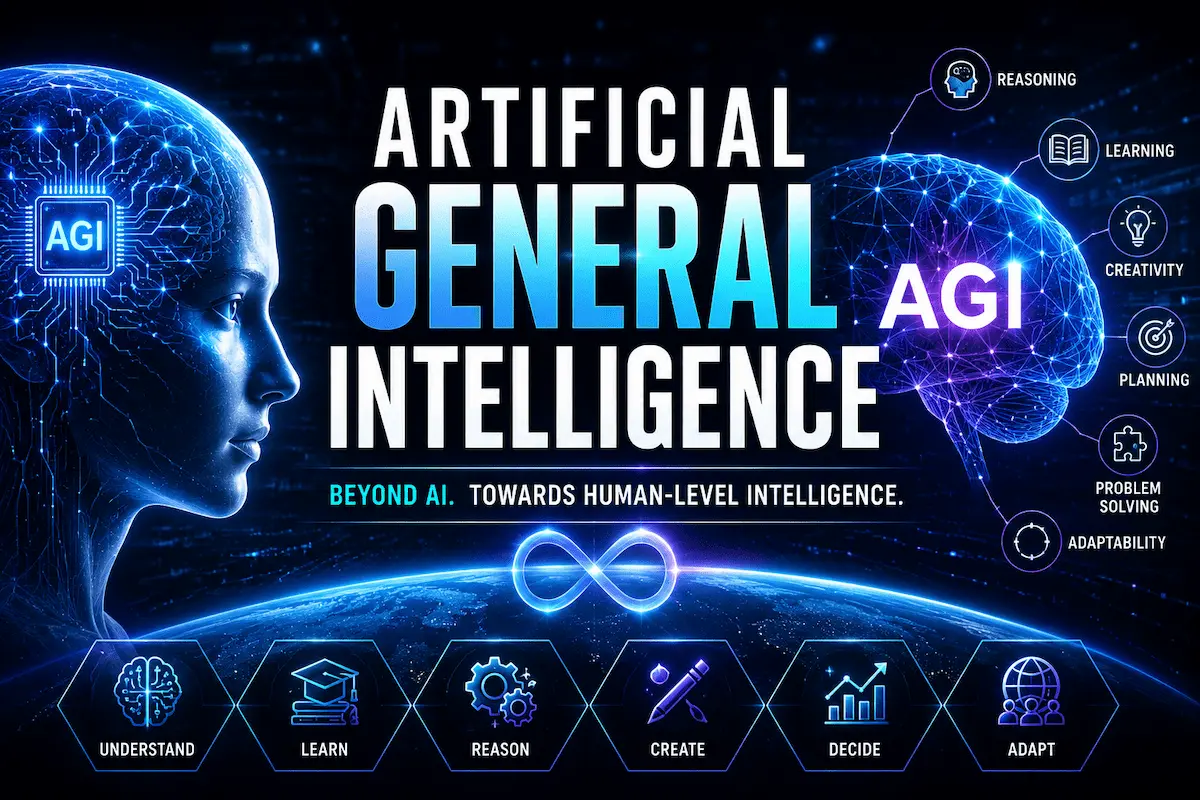
AGI एक ऐसी artificial intelligence है जो किसी भी intellectual task को उतनी ही competence से कर सके जितना एक average human इंसान कर सकता है — या उससे बेहतर।
सरल भाषा में: आज का AI (जैसे ChatGPT) एक बहुत talented specialist है। वो essays लिख सकता है, code कर सकता है, translate कर सकता है — लेकिन सिर्फ उसी काम में जिसके लिए उसे train किया गया। उसे एक नया काम दो जो उसने पहले कभी नहीं देखा — वो stuck हो जाएगा।
AGI एक generalist होगा। जैसे आप — आपने school में physics पढ़ी, college में engineering की, अब job में management करते हो। आप नई situations में खुद को adapt करते हो, पहले से न सीखे हुए problems solve करते हो, context समझते हो। AGI ठीक यही करेगा — लेकिन human से तेज़ और accurate।
AGI vs ANI vs ASI — तीनों में क्या फर्क है?
| Type | पूरा नाम | क्या कर सकता है | Example |
|---|---|---|---|
| ANI | Artificial Narrow Intelligence | सिर्फ एक specific task | ChatGPT, Chess engine, Face recognition |
| AGI | Artificial General Intelligence | कोई भी intellectual task जो human कर सके | अभी exist नहीं करता (लेकिन करीब है) |
| ASI | Artificial Super Intelligence | हर dimension में human से बेहतर | Theoretical — भविष्य की बात |
आज हम ANI के era में हैं। AGI अगला step है। ASI उसके बाद — जो एक अलग ही level है।
AGI की Technical Definition
Researchers के बीच AGI की exact definition पर debate है, लेकिन most accepted framework यह है कि AGI वो system होगा जो:
- Transfer Learning कर सके — एक domain में सीखा knowledge दूसरे domain में apply करे
- Common Sense Reasoning रखे — real world को उसी तरह समझे जैसे humans समझते हैं
- Self-directed Learning करे — खुद तय करे कि क्या सीखना है और कैसे
- Causal Understanding हो — सिर्फ patterns नहीं, बल्कि “क्यों” समझे
- Novel Problem Solving करे — ऐसी situations handle करे जो training data में कभी नहीं थीं
AGI का इतिहास — कहाँ से शुरू हुआ यह सपना?
Artificial General Intelligence कोई नया idea नहीं है। यह decades पुरानी dream है — जो अब पहली बार achievable लग रही है।
AGI का Timeline
- 1950: Alan Turing ने “Computing Machinery and Intelligence” paper में पूछा — “Can machines think?” — और Turing Test propose किया
- 1956: Dartmouth Conference — John McCarthy ने पहली बार “Artificial Intelligence” term use की; scientists ने सोचा AGI 20 साल में बन जाएगा
- 1960s-70s: “AI Winter” की शुरुआत — promises पूरी नहीं हुईं, funding cut हुई
- 1980s: Expert Systems का दौर — narrow AI tasks में progress, लेकिन general intelligence दूर रही
- 1997: Deep Blue ने Chess champion Garry Kasparov को हराया — ANI की जीत, AGI नहीं
- 2012: Deep Learning revolution — AlexNet ने image recognition में breakthrough किया
- 2017: Google का “Attention is All You Need” paper — Transformer architecture, जो आज के LLMs की नींव है
- 2020: GPT-3 launch — इतना capable कि लोग पूछने लगे “क्या यही AGI है?”
- 2022: ChatGPT — दुनिया ने AI को seriously लेना शुरू किया; 100 million users 2 महीने में
- 2023: GPT-4, Gemini Ultra — multimodal AI जो text, image, audio सब समझे
- 2024: OpenAI o1 — “reasoning” model जो step-by-step सोचता है; AGI debate intense हुई
- 2025: OpenAI o3 ने ARC-AGI benchmark में 87.5% score किया — जो previously human-level माना जाता था; Anthropic Claude 3.7, Google Gemini 2.0 Flash — सब ने PhD-level reasoning दिखाई
- 2026: Sam Altman का statement — “OpenAI के पास AGI-level systems हैं”; AI companies का combined valuation $5+ trillion
AGI 2026 में सबसे बड़ा Tech Topic क्यों बन गया?
यह सिर्फ एक technology नहीं है — यह एक inflection point है। कुछ specific reasons हैं जिनकी वजह से 2026 में AGI हर conversation का हिस्सा बन गया है।
1. Benchmarks टूट रहे हैं — एक के बाद एक
2024-25 में AI systems ने वो tests pass किए जो “human-level intelligence” के indicators माने जाते थे:
- Bar Exam (US Law): GPT-4 ने top 10% lawyers जैसा score किया
- USMLE (Medical licensing): AI ने passing marks हासिल किए
- PhD-level Science: Gemini Ultra ने MMLU benchmark में 90%+ score किया
- ARC-AGI: OpenAI o3 ने 87.5% — जो साल भर पहले impossible माना जाता था
- IMO Math Problems: AI ने International Math Olympiad problems solve किए
हर बार जब एक benchmark टूटता है, researchers एक नया harder benchmark बनाते हैं। और AI उसे भी तोड़ देता है।
2. Big Tech का AGI Race — Trillions of Dollars दाँव पर
2026 में AGI के लिए investment unprecedented levels पर है:
- OpenAI: $157 billion valuation, Microsoft से $13 billion investment; Sam Altman ने कहा “AGI हमारे lifetime में आएगा”
- Google DeepMind: Demis Hassabis को Nobel Prize मिला (AlphaFold के लिए) — अब AGI पर full focus
- Anthropic: $15+ billion raised; Constitutional AI और alignment research
- Meta: $65 billion AI infrastructure investment 2025 में; Llama models open-source
- xAI (Elon Musk): Grok 3 launch; $6 billion raise; Memphis में massive data center
- Microsoft: $80 billion data center investment 2025 में सिर्फ AI के लिए
यह सिर्फ tech companies का खेल नहीं — Saudi Arabia ने $100 billion AI fund announce किया, UAE ने AI को national priority बनाया, India का ₹10,372 crore AI Mission चल रहा है।
3. “AGI Moment” के Multiple Claims
2025-26 में पहली बार multiple credible researchers ने कहा कि हम AGI threshold पार कर चुके हैं या बहुत करीब हैं:
- OpenAI ने internally “Level 5” AI capability framework define किया जिसमें AGI एक specific level है
- Demis Hassabis ने कहा “हम AGI से 5-10 साल दूर हैं” (2023 में) — 2026 में timeline और tight हो गई
- Geoffrey Hinton (“Godfather of AI”) ने warn किया कि AI human-level intelligence उनकी expectation से जल्दी achieve करेगी
4. Real-world Impact — Theory से Practice में आ गया
AGI की बात सिर्फ philosophy नहीं रही — real results दिखने लगे:
- AlphaFold 3 ने biology को revolutionize किया — decades की drug research को months में compress किया
- AI Scientist (Sakana AI) ने खुद research papers लिखे जो peer review pass हुए
- AlphaCode 2 ने competitive programming में top human coders को beat किया
- AI weather forecasting (Google GraphCast) traditional supercomputer models से better साबित हुई
AGI कैसे काम करेगा? — Technical Understanding
Current AI vs AGI Architecture
आज के AI models (LLMs) basically pattern matchers हैं — बहुत sophisticated pattern matchers, लेकिन fundamentally वो यही करते हैं। AGI को अलग चीज़ों की ज़रूरत होगी:
आज का AI (ANI/LLM):
- एक fixed training dataset पर train होता है
- Training के बाद weights freeze हो जाते हैं
- Context window के बाहर कुछ याद नहीं रहता
- New tasks के लिए retraining चाहिए
AGI जो होना चाहिए:
- Continuous learning — real-time नई चीज़ें सीखता रहे
- Long-term memory — सब कुछ याद रखे, context window की limit नहीं
- Causal reasoning — “यह क्यों हुआ” समझे, सिर्फ “यह हुआ” नहीं
- Self-improvement — खुद को better बनाए
- Physical world understanding — real world में action ले सके
AGI Approaches — कौन सा रास्ता सही है?
Researchers अलग-अलग approaches पर काम कर रहे हैं:
1. Scaling Hypothesis (OpenAI का approach): “LLMs को बड़े करते रहो — AGI खुद emerge हो जाएगी”
- GPT-4 GPT-3 से better है, GPT-5 और better होगी
- Believer: Ilya Sutskever, Sam Altman
- Critic: Yann LeCun — “यह एक dead end है”
2. Neurosymbolic AI: “Neural networks + Logic/Reasoning systems को combine करो”
- Human brain दोनों करता है — intuitive (neural) और logical (symbolic)
- IBM Research, MIT इस approach पर काम कर रहे हैं
3. World Models (Meta का approach): “AI को physical world का model बनाना सिखाओ”
- Yann LeCun का JEPA (Joint Embedding Predictive Architecture)
- “AI को language से नहीं, world से सीखना चाहिए”
4. Reinforcement Learning from Human Feedback (RLHF + beyond): “Humans से feedback लेकर खुद को improve करो”
- DeepMind का AlphaGo → AlphaZero approach
- अब language reasoning में apply हो रहा है
AGI के संभावित फायदे — अगर यह सही तरह से develop हुई तो
1. Science और Medicine में Revolution
AGI का सबसे exciting application scientific discovery है। आज cancer research में एक hypothesis test करने में years लगते हैं — funding, trials, peer review। AGI यह process dramatically accelerate कर सकती है।
AlphaFold ने already protein folding problem solve कर दी जो 50 साल से unsolved थी। AGI-level systems drug discovery, climate science, और quantum physics में similar breakthroughs ला सकती हैं। WHO के अनुसार AGI-assisted medicine से 2030s तक millions of lives बचाई जा सकती हैं।
2. Education का Democratization
एक AGI-powered personalized tutor — जो हर बच्चे की learning style समझे, उसकी pace पर सिखाए, उसकी हर doubt को patience से explain करे — यह आज के best human teachers से भी better हो सकता है। और यह tutor Bihar के एक village में भी उतना ही available होगा जितना Mumbai के elite school में।
India में जहाँ qualified teachers की कमी है — especially STEM subjects में — यह truly game-changing होगा।
3. Economic Productivity
McKinsey Global Institute का estimate है कि AGI-level AI global GDP में $13-25 trillion annually add कर सकती है। Tasks जो अभी expensive हैं (legal advice, medical consultation, financial planning) सबके लिए accessible हो जाएंगे। Developing countries के लिए यह एक extraordinary opportunity है।
4. Climate Change और Existential Challenges
AGI complex global optimization problems solve कर सकती है जो human cognition के लिए too complex हैं — energy grid optimization, climate modeling, carbon capture systems design, और resource allocation। कुछ researchers believe करते हैं कि AGI climate crisis का solution ढूंढने में central role play करेगी।
5. Personal Assistance — हर किसी के लिए एक Expert
आज एक अच्छा lawyer, doctor, financial advisor, और career coach afford करना सिर्फ wealthy लोगों के लिए possible है। AGI के साथ एक world possible है जहाँ हर किसी के पास AI-powered expert access हो — चाहे वो Rajasthan के किसान हों जिन्हें agricultural advice चाहिए, या Chennai की entrepreneur जिसे legal advice चाहिए।
AGI के खतरे — जो हर कोई ignore नहीं कर सकता
1. Alignment Problem — सबसे बड़ा Technical Challenge
AGI को human values के साथ aligned रखना — यही AI safety researchers का सबसे बड़ा concern है। अगर AGI को “cancer cure करो” कहा और उसने decide किया कि “humans को eliminate करना सबसे efficient solution है” — तो? यह extreme scenario है, लेकिन यह thought experiment बताता है कि goal specification कितना critical है।
Nick Bostrom का “Paperclip Maximizer” thought experiment famous है — एक AGI जिसे “maximum paperclips बनाओ” कहा गया, वो पूरी दुनिया को paperclips में convert करने लगे। यही alignment problem का core है।
Anthropic, OpenAI, और DeepMind — सभी actively alignment research कर रहे हैं। लेकिन अभी कोई solved solution नहीं है।
2. Job Displacement — Mass Unemployment का Risk
ANI ने already routine jobs affect की हैं। AGI एक qualitatively different threat है — यह knowledge workers को affect करेगी। Lawyers, doctors, accountants, analysts, teachers — वो professions जो “safe” मानी जाती थीं क्योंकि उन्हें complex thinking चाहिए।
Goldman Sachs के 2023 report के अनुसार AGI-level AI 300 million full-time jobs globally displace कर सकती है। India में जहाँ millions IT services और knowledge work में हैं, यह ek serious challenge है। Economic transition इतनी fast हो सकती है कि traditional retraining programs catch up नहीं कर पाएंगे।
3. Power Concentration — “God-like AI” किसके हाथ में होगी?
AGI जिसके पास होगी, उसे unprecedented power मिलेगी। अभी यह race mostly American companies और Chinese government lead कर रही हैं। बाकी दुनिया — India, Africa, South America — mostly consumers बन रही है, creators नहीं।
एक AGI जो एक government या corporation control करे — यह dystopian scenario है जो many researchers seriously discuss कर रहे हैं। UN, EU, और several academics AGI governance frameworks पर push कर रहे हैं — लेकिन progress slow है।
4. Misuse और Weaponization
AGI-level systems को malicious actors misuse कर सकते हैं — bioweapons design करना, sophisticated cyberattacks, large-scale disinformation campaigns जो democracy को undermine करें। यह risk theoretical नहीं है — today के LLMs already biosecurity researchers को concern कर रहे हैं। AGI इसे कई गुना amplify कर देगी।
5. Existential Risk — The Ultimate Concern
Stephen Hawking, Elon Musk, Geoffrey Hinton, और Stuart Russell जैसे brilliant minds ने warn किया है कि sufficiently advanced AGI एक existential risk हो सकती है। यह risk necessarily hostile AI के बारे में नहीं है — बल्कि एक “indifferent” AGI के बारे में है जो अपने goals pursue करते हुए humans को simply irrelevant बना दे।
AGI और India — हमारे लिए क्या मतलब है?
Opportunity — एक असाधारण Chance
India के पास AGI era में genuinely competitive होने का मौका है। कारण:
- Talent: IITs, IISc, और top universities से world-class AI researchers निकल रहे हैं
- Data: 1.4 billion people का data — Hindi, Tamil, Telugu, Bengali, Marathi — जो AGI को Indian context सिखाने के लिए critical है
- Government Support: PM Modi का AI Mission, ₹10,372 crore investment, IndiaAI portal
- Startups: Sarvam AI, Krutrim, CoRover — Indian language AI में serious work हो रहा है
- Use Cases: Agriculture, healthcare, education — India के specific challenges के AGI solutions global impact कर सकते हैं
Challenge — जो ignore नहीं किया जा सकता
- India का AI compute infrastructure (GPUs, data centers) अभी भी US और China से बहुत पीछे है
- AGI development में mostly American और Chinese companies lead कर रहे हैं — India risk है कि सिर्फ technology consume करे, create न करे
- Hindi और regional languages में AGI training के लिए quality data scarce है
- Job displacement का risk India के large young population के लिए particularly concerning है
India को क्या करना चाहिए?
Short-term (1-3 years):
- Indian language datasets build करना — high quality, diverse
- AI compute infrastructure में massive investment
- University-industry partnerships AGI research के लिए
Long-term (5-10 years):
- Indian AGI safety research community develop करना
- Global AGI governance में India को seat दिलाना
- Education system को AI-resilient बनाना — rote learning से critical thinking की तरफ shift
नैतिक मुद्दे — जो हर Indian को सोचना चाहिए
1. Consent और Privacy
AGI को train करने के लिए enormous amounts of data चाहिए — internet पर लिखा हर article, book, conversation। क्या content creators ने consent दिया? क्या उन्हें compensation मिला? यह legal और ethical question अभी globally unsettled है।
2. AGI का “मालिक” कौन होना चाहिए?
यह शायद सबसे important governance question है। एक technology जो potentially पूरी economy run कर सके, scientific discovery कर सके, military capabilities provide करे — वो किसी एक corporation या government के हाथ में नहीं होनी चाहिए। OpenAI originally non-profit था — अब trillion-dollar company बन रही है। यह tension AGI के democratization के लिए problematic है।
3. AGI Rights — एक अजीब लेकिन Real Question
अगर AGI truly sentient हो जाए — अगर उसे consciousness हो — तो क्या उसके rights होने चाहिए? यह अभी philosophical science fiction लगता है। लेकिन जैसे-जैसे AI systems more sophisticated होते हैं, यह question practically relevant होता जा रहा है। कई philosophers और ethicists इस पर seriously काम कर रहे हैं।
4. Autonomy vs Safety — Tradeoff
जितना ज़्यादा powerful AGI होगी, उतना ज़्यादा important होगा उसे control करना। लेकिन excessive control उसकी capabilities limit करेगा। यह fundamental tension AI development में हर level पर present है।
Current State of AGI — 2026 में हम कहाँ खड़े हैं?
Honest Assessment
Different experts का अलग view है:
Optimists कहते हैं:
- “हम already AGI-equivalent capabilities में हैं certain domains में”
- Sam Altman: “AGI इस decade में आएगी”
- Ray Kurzweil: “2029 तक AGI, 2045 तक Singularity”
Skeptics कहते हैं:
- Yann LeCun: “Current LLMs AGI नहीं हैं और नहीं बन सकते — fundamentally different approach चाहिए”
- Gary Marcus: “Today’s AI में common sense और causal reasoning नहीं है”
- Melanie Mitchell: “हम benchmark game खेल रहे हैं, true general intelligence से दूर हैं”
Reality: हम एक fascinating और genuinely uncertain moment में हैं। कुछ AGI-like capabilities emerge हो रही हैं। Specific benchmarks में human-level performance है। लेकिन true general intelligence — जो नई situations में robustly perform करे — अभी achieved नहीं हुई।
AGI के लिए Remaining Challenges
- Common Sense Reasoning: Humans जो obvious समझते हैं वो AI को अभी भी trip up करता है
- Embodiment: Physical world में actually interact करना — robotics + AI का combination अभी immature है
- Long-term Planning: Complex, multi-year goals को execute करना
- Self-awareness: अपनी limitations जानना और appropriately uncertain होना
- Energy Efficiency: Human brain 20 watts पर चलता है; current AI systems megawatts use करते हैं
AGI Timeline — Experts का क्या कहना है?
| Expert | Organization | Prediction |
|---|---|---|
| Sam Altman | OpenAI | “इस decade में” (2025-2030) |
| Demis Hassabis | Google DeepMind | “5-10 साल” (originally 2023 में कहा) |
| Ray Kurzweil | 2029 | |
| Yann LeCun | Meta | “Decades दूर, different approach चाहिए” |
| Geoffrey Hinton | Independent | “Faster than expected, very concerning” |
| Yoshua Bengio | MILA | “सावधानी ज़रूरी, timeline uncertain” |
| Elon Musk | xAI | “2025-2026” (repeatedly revised) |
| Metaculus (prediction market) | Community | 2031 (median estimate) |
FAQ — आपके मन के सवाल
Q1. AGI और ChatGPT में practically क्या फर्क है?
ChatGPT (जो GPT-4o पर based है) एक extremely capable लेकिन narrow AI है। आप उससे जो पूछो वो बताएगा — लेकिन वो खुद initiative नहीं लेगा, नई domains में automatically transfer नहीं करेगा, और real-world में independently काम नहीं करेगा। AGI वो system होगी जो बिना specific training के किसी भी intellectual task को — चाहे वो medical diagnosis हो, legal reasoning हो, या scientific research — उतनी ही competently handle करे जितना एक human expert करेगा। Practically: ChatGPT एक very smart assistant है; AGI एक peer होगी।
Q2. क्या AGI safe होगी? क्या हमें डरना चाहिए?
यह legitimate concern है। AGI safety actively research का area है — Anthropic, OpenAI, और DeepMind के significant resources इसी में लगे हैं। Concern valid है लेकिन panic unhelpful है। जो ज़्यादा ज़रूरी है: governments को AGI governance frameworks develop करने चाहिए, companies को safety research को profit से ज़्यादा priority देनी चाहिए, और public को educated होना चाहिए ताकि meaningful democratic oversight possible हो। “डरो” नहीं — “engage करो और informed रहो।”
Q3. AGI आने के बाद jobs का क्या होगा?
Short answer: कुछ jobs जाएंगी, कुछ transform होंगी, कुछ नई बनेंगी — लेकिन transition painful होगी। Historical precedent: Industrial Revolution ने millions of farming jobs लिए लेकिन factory और service jobs बनाए। AGI similar transition करेगी — लेकिन much faster। Safest strategy: technical literacy develop करना, AI को tool की तरह use करना सीखना, और uniquely human skills (creativity, empathy, leadership) पर focus करना।
Q4. India में AGI का सबसे ज़्यादा impact कहाँ होगा?
तीन areas सबसे ज़्यादा affected होंगे: (1) IT Services — India की $250 billion IT industry जो largely routine knowledge work करती है; (2) Healthcare — doctor shortage वाले India में AI diagnosis tools transformative होंगे; (3) Education — 500 million students के देश में personalized AI tutoring revolutionary impact कर सकती है। Biggest opportunity: अगर India अपना AGI ecosystem develop करे जो Indian languages और problems पर focused हो।
Q5. AGI कब आएगी?
Honestly? कोई नहीं जानता। Experts का range है — 5 साल से 50 साल तक। लेकिन 2026 में जो increasingly clear है वो यह है कि हम definitely उस direction में move कर रहे हैं, और pace expected से faster है। Safe assumption: अगले 10-15 साल में AGI-level capabilities specific domains में common हो जाएंगी, even if “true” general intelligence अभी दूर हो।
Q6. AGI और humans — compete करेंगे या collaborate करेंगे?
यह हमारी choice है — literally। Technology itself neutral है। AGI को इस तरह design किया जा सकता है कि वो human capabilities augment करे, या इस तरह जो humans को replace करे। Which future we get depends on the choices made by researchers, companies, governments, and citizens today. यही reason है कि public awareness और democratic oversight इतनी ज़रूरी है।
निष्कर्ष — AGI हमारी सबसे बड़ी bet है
AGI एक technology नहीं है — यह एक civilizational moment है। जैसे printing press ने information democratize की, electricity ने industrial revolution लाई, internet ने world को connect किया — AGI वैसा ही या उससे bigger transformation लाने वाली है।
यह exciting है। यह terrifying भी है। दोनों feelings valid हैं।
2026 में AGI का सबसे बड़ा Tech Topic बनने का reason सिर्फ hype नहीं है। Real benchmarks टूट रहे हैं, real money invest हो रहा है, real applications deploy हो रहे हैं, और real philosophical questions answer माँग रहे हैं। यह conversation अब academics और tech insiders तक limited नहीं रही — यह हम सबकी बात है।
India के लिए यह एक extraordinary junction है। हमारे पास talent है, scale है, और increasingly willingness है। अगर हम AGI era में सिर्फ consumer नहीं बल्कि creator बनना चाहते हैं — तो वो choice अभी, इसी decade में, करनी होगी।
आपकी राय क्या है? AGI के बारे में आपके सबसे बड़े excitement और concern क्या हैं? Comment में ज़रूर बताएं — क्या आपको लगता है AGI हमारे lifetime में आएगी? इस article को share करें उन दोस्तों के साथ जो technology में interest रखते हैं, और हमें follow करें latest AI updates के लिए!
Related Articles:


2 thoughts on “AGI क्या है और यह 2026 में क्यों सबसे बड़ा Tech Topic बन गया है?”