
हर साल भारत में लगभग 5 लाख लोग organ failure की वजह से मर जाते हैं। Kidney चाहिए — waiting list पर 2-3 साल। Liver चाहिए — donor मिलना लगभग impossible। Heart चाहिए — तो भगवान से माँगो। Organ donation इतनी कम है कि ज़्यादातर लोग अपनी बारी आने से पहले ही चले जाते हैं।
लेकिन क्या हो अगर doctors को donor का इंतज़ार ही न करना पड़े? क्या हो अगर आपका kidney, liver, या skin — lab में print हो सके? ठीक वैसे जैसे आप घर पर document print करते हो?
यह science fiction नहीं है। 3D Bioprinting नाम की technology यह सच में कर रही है — और 2026 में यह उम्मीद से कहीं ज़्यादा आगे पहुँच चुकी है।
आज इस article में हम समझेंगे — 3D Bioprinting क्या है, यह कैसे काम करती है, अब तक क्या-क्या print हो चुका है, इसके सामने क्या challenges हैं, और India के लिए इसका क्या मतलब है।
चलिए शुरू करते हैं।
पहले समझो — Normal 3D Printing क्या होती है?
3D Bioprinting को समझने से पहले basic 3D printing जाननी ज़रूरी है।
Normal 3D printing में एक machine layer-by-layer material deposit करती है — जैसे plastic, metal, या resin — और एक 3D object बनाती है।
सोचिए एक cake की layered decoration। नीचे से ऊपर तक एक-एक layer। बस 3D printing में cake की जगह कोई भी object होता है — phone case, machine part, toy, architecture model।
यह technology already revolutionary है। लेकिन इसमें material हमेशा non-living होता है।
3D Bioprinting — जब Material ज़िंदा हो
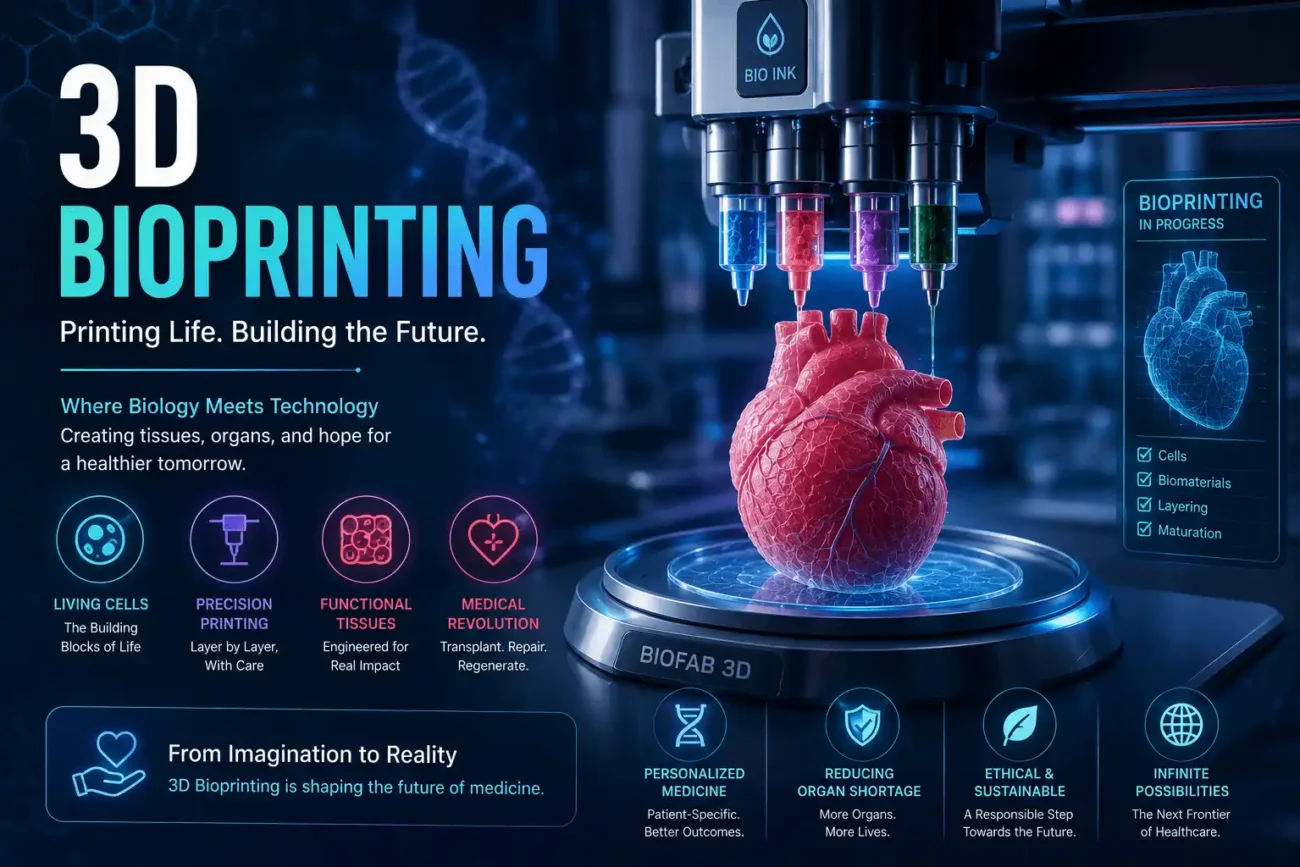
3D Bioprinting normal 3D printing का एक advanced form है — जिसमें living cells use होती हैं।
यानी machine वही layer-by-layer approach follow करती है। लेकिन plastic की जगह — human cells, growth factors, और biological materials use होते हैं।
Result? एक living, biological structure — जो theoretically human body में function कर सके।
यह concept जितना simple लगता है — execute करना उतना ही complex है। लेकिन scientists ने इसे possible बना दिया है।
3D Bioprinting कैसे काम करती है?
यह process तीन main steps में होती है।
Step 1 — Bioink तैयार करना
Normal 3D printer में ink या filament होता है। Bioprinter में होता है — Bioink।
Bioink एक special material है जिसमें:
- Living cells होती हैं (patient की खुद की cells भी हो सकती हैं)
- Hydrogel — एक water-based material जो cells को support करता है
- Growth factors — chemicals जो cells को grow करने में help करते हैं
- Nutrients — cells को alive रखने के लिए
Bioink को exactly right consistency पर रखना बहुत critical है — बहुत thick हो तो cells die हो जाएंगी, बहुत thin हो तो structure collapse हो जाएगा।
Step 2 — Digital Blueprint बनाना
Print करने से पहले एक exact digital model बनाना पड़ता है।
यह model patient के CT scan या MRI से बनाया जाता है — ताकि printed organ उनके body के लिए perfectly fit हो।
Computer software इस scan को layer-by-layer printing instructions में convert करता है — exactly वैसे जैसे normal 3D printer के लिए CAD file होती है।
Step 3 — Layer-by-Layer Printing
अब असली printing होती है।
Bioprinter एक precision नozzle से Bioink को layer-by-layer deposit करता है। हर layer पिछली layer के ऊपर perfectly align होती है।
यह process बेहद slow होती है — एक simple structure बनाने में भी कई घंटे लग सकते हैं। Complex organs के लिए तो days भी।
Step 4 — Maturation (सबसे Critical Phase)
Print होने के बाद structure को एक bioreactor में रखा जाता है।
Bioreactor एक controlled environment है जो human body जैसी conditions simulate करता है — सही temperature, nutrients, oxygen — ताकि cells grow करें, divide हों, और एक functional tissue बनाएं।
यह maturation phase weeks से months तक चल सकता है।
अब तक क्या-क्या Print हो चुका है?
यह सबसे exciting part है। 2026 तक scientists ने कई impressive structures bioprint की हैं।
✅ Skin — पहली बड़ी Success
Skin सबसे पहले successfully bioprint हुई — क्योंकि यह relatively simple structure है।
2026 में burn victims के लिए bioprinted skin grafts real clinical trials में हैं। यह technology already burn treatment को revolutionize कर रही है। Traditional skin grafts में patient के शरीर के दूसरे हिस्से से skin लेनी पड़ती थी — bioprinting ने यह ज़रूरत खत्म कर दी।
✅ Cartilage और Bone — Joint Repair
Cartilage (जैसे knee का cartilage) successfully bioprint हो चुका है।
Arthritis और sports injuries के patients के लिए यह बहुत promising है। Bioprinted cartilage already कुछ patients में implant हो चुका है — early results encouraging हैं।
Bone bioprinting भी advance हो रही है — छोटे bone segments successfully print और implant हो चुके हैं।
✅ Cornea — आँखों की रोशनी वापस
2018 में UK के scientists ने पहली bioprinted cornea बनाई। 2026 तक यह technology mature हो चुकी है।
India में लाखों लोग corneal blindness से पीड़ित हैं। Bioprinted corneas इनके लिए एक game-changer हो सकती हैं।
✅ Blood Vessels — Circulation की नींव
Functional blood vessels successfully bioprint हो चुकी हैं। यह बहुत important है क्योंकि बड़े organs को blood supply चाहिए — और blood vessels के बिना cells survive नहीं कर सकतीं।
यह breakthrough बड़े organs की printing के लिए एक critical step है।
✅ Mini-Organs (Organoids) — Drug Testing का Future
यह शायद सबसे practical near-term application है।
Scientists “organoids” बना रहे हैं — miniature versions of organs। यह full-size organs नहीं हैं, लेकिन real organs जैसे function करते हैं।
Use case: नई दवाई test करनी है → जानवरों पर experiment करने की बजाय → bioprinted human organoid पर test करो। Results ज़्यादा accurate, ethical, और fast।
Pharmaceutical companies इस technology में billions invest कर रही हैं।
🔄 In Progress — Heart, Kidney, Liver
यह तीनों अभी full functional stage पर नहीं हैं — लेकिन progress real है।
Heart: 2019 में Tel Aviv University ने पहला bioprinted heart बनाया था — लेकिन वो बहुत छोटा था और fully functional नहीं था। 2026 तक heart tissue patches successfully बन चुके हैं जो damaged heart muscle को repair करने में help करते हैं।
Kidney: Kidney structure print हो चुका है लेकिन full functionality — यानी actually blood filter करना — अभी achieve नहीं हुई।
Liver: Liver tissue और mini-livers बन चुके हैं। Drug testing में use हो रहे हैं। Full transplantable liver अभी 5-10 साल दूर है।
Bioprinting के तीन Main Types
सभी bioprinters एक जैसे नहीं होते। तीन main approaches हैं।
1. Extrusion-Based Bioprinting
यह सबसे common approach है। एक nozzle से Bioink को squeeze करके layer-by-layer deposit किया जाता है — exactly जैसे toothpaste tube से paste निकलता है।
Pros: Affordable, versatile, large structures बना सकता है। Cons: Low resolution, cells को pressure damage हो सकता है।
2. Inkjet Bioprinting
Droplets of Bioink को precisely deposit किया जाता है — exactly जैसे normal inkjet printer paper पर ink drops करता है।
Pros: High speed, high resolution, cells को कम damage। Cons: Limited material viscosity, nozzle clogging।
3. Laser-Assisted Bioprinting (LAB)
Laser beam Bioink को precisely target location पर transfer करती है। नozzle नहीं होता — इसलिए clogging की problem नहीं।
Pros: Highest precision, cells को minimum damage, complex structures। Cons: Most expensive, slowest।
3D Bioprinting vs Traditional Organ Transplant
| Factor | Traditional Transplant | 3D Bioprinting |
|---|---|---|
| Donor की ज़रूरत | ✅ हाँ — बड़ी problem | ❌ नहीं — cells से print |
| Rejection risk | बहुत ज़्यादा | बहुत कम (खुद की cells) |
| Waiting time | सालों | Weeks to months |
| Availability | बेहद limited | Theoretically unlimited |
| Customization | नहीं | हाँ — perfect fit |
| Cost (अभी) | बहुत महंगा | अभी और भी महंगा |
| Cost (future) | Same | बहुत कम होगा |
| Ethical issues | Donor consent | Minimal |
| Success rate | Moderate | Improving rapidly |
| Current status | Mainstream | Early clinical stage |
सबसे important advantage: अगर patient की खुद की cells use हों — तो body उस organ को reject नहीं करेगी। यह transplant की सबसे बड़ी problem solve कर देता है।
3D Bioprinting के सामने सबसे बड़े Challenges
यह technology जितनी promising है — उतनी ही complex भी है। कुछ serious challenges हैं।
Challenge 1 — Vascularization (Blood Supply)
यह अब तक का सबसे बड़ा technical challenge है।
कोई भी organ तब तक alive नहीं रह सकता जब तक उसे blood supply न मिले। Blood vessels organs को oxygen और nutrients deliver करती हैं।
छोटे structures (skin, cartilage) में यह problem नहीं है — nutrients diffusion से मिल जाते हैं। लेकिन बड़े organs (kidney, liver, heart) में complex blood vessel networks ज़रूरी हैं।
इन्हें print करना अभी तक fully solved नहीं है। यही वजह है कि बड़े organs की printing अभी limited है।
Challenge 2 — Cell Viability
Printing process के दौरान cells को stress होता है — mechanical pressure, temperature changes, UV light।
बहुत सी cells इस process में die हो जाती हैं। Enough cells को alive रखना और उन्हें properly function करवाना — यह एक ongoing challenge है।
Challenge 3 — Innervation (Nerve Connections)
Organs सिर्फ cells और blood vessels नहीं होते — उनमें nerves भी होती हैं।
Nerves के बिना organ properly function नहीं कर सकता। Nerve connections को bioprint करना अभी भी बहुत early stage पर है।
Challenge 4 — Regulatory Approval
एक bioprinted organ को human body में implant करने से पहले — years of clinical trials, safety testing, और regulatory approvals चाहिए।
यह process slow है। FDA (USA) और other regulatory bodies अभी bioprinted products के लिए clear frameworks develop कर रही हैं।
Challenge 5 — Cost
अभी 3D Bioprinting बेहद expensive है। Research-grade bioprinters लाखों dollars के हैं। Bioink भी बहुत costly है।
लेकिन — जैसे-जैसे technology mature होगी, cost dramatically गिरेगी। यही normal 3D printing के साथ हुआ था।
2026 में Global Bioprinting Landscape
दुनिया भर में कौन-कौन इस field में lead कर रहा है?
| Organization | Country | Achievement |
|---|---|---|
| Organovo | USA | पहली commercial bioprinting company — liver tissue |
| CELLINK | Sweden | Bioink और bioprinter manufacturer — 100+ countries में |
| United Therapeutics | USA | Bioprinted lungs research |
| Wake Forest Institute | USA | Ear, bone, muscle bioprinting |
| Tel Aviv University | Israel | First bioprinted heart (2019) |
| Aspect Biosystems | Canada | Lung tissue bioprinting |
| Riken Institute | Japan | Skin bioprinting clinical trials |
| IIT Bombay | India | Bioprinting research — early stage |
Global Bioprinting Market Size 2026: लगभग $3.5 billion — और 2030 तक $10 billion से ज़्यादा होने की उम्मीद।
India और 3D Bioprinting — हमारा Future
भारत के लिए 3D Bioprinting कितनी important है? बहुत ज़्यादा — क्योंकि हमारी problem बहुत बड़ी है।
India की Organ Crisis — Numbers में
- हर साल 5 लाख+ लोग organ failure से मरते हैं
- Kidney transplant की ज़रूरत: 2 लाख+ per year
- Available kidney donors: सिर्फ 8,000-10,000 per year
- Liver transplant need vs availability: 10:1 ratio
- Corneal blindness: 1.2 million cases — और बढ़ रहे हैं
यह gap tragic है। 3D Bioprinting इस gap को भरने की potential रखती है।
India में क्या हो रहा है?
IIT Bombay और IIT Madras में bioprinting research labs establish हो चुकी हैं। Early stage पर हैं लेकिन work serious है।
AIIMS Delhi ने bioprinting technology को explore करना शुरू किया है — primarily skin grafts के लिए burn patients हेतु।
Department of Biotechnology (DBT) ने tissue engineering और bioprinting research को funding देना शुरू किया है।
Startup Ecosystem: Pandorum Technologies (Bangalore) एक Indian biotech startup है जो liver cells और cornea bioprinting पर काम कर रही है — यह India का सबसे prominent bioprinting startup है।
India को क्या करना चाहिए?
India की problem इतनी बड़ी है कि हम सिर्फ दूसरे देशों की technology का इंतज़ार नहीं कर सकते।
हमें चाहिए:
- Bioprinting research में बड़ा investment
- IITs और medical colleges में collaboration
- Regulatory framework जो innovation को support करे
- International partnerships — USA, EU, Israel के साथ
- Affordable bioprinting solutions — India के लिए cost एक major factor है
Bioprinting का Future — अगले 10 साल में क्या होगा?
Scientists और researchers का roadmap कुछ ऐसा है:
2026-2028:
- Skin grafts mainstream clinical use में
- Cartilage और bone repairs common
- Cornea transplants clinical trials complete
- Drug testing organoids pharmaceutical industry में standard
2028-2032:
- Kidney function partially achieved
- Heart tissue patches mainstream
- Blood vessel networks solved
- Cost significantly कम
2032-2035:
- First fully functional bioprinted kidney transplant (possibly)
- Liver organoids for transplant
- Personalized medicine — हर patient के लिए custom tissue
2035 और आगे:
- Full organ printing mainstream
- Organ waiting lists dramatically कम
- “Print your own organ” concept reality बनने की शुरुआत
FAQ — आपके मन के सवाल
Q1. क्या bioprinted organ reject हो सकता है?
अगर patient की खुद की cells use हों — rejection risk बहुत कम होती है। यही bioprinting का सबसे बड़ा advantage है। लेकिन अगर donor cells use हों तो rejection possible है — इसके लिए immunosuppressant drugs चाहिए होंगे जैसे traditional transplant में।
Q2. Bioprinted organ कितने साल तक चलेगा?
यह अभी fully answered नहीं है क्योंकि technology इतनी नई है। Theoretically — अगर living cells properly function करें तो organ decades तक चल सकता है। Long-term studies अभी चल रही हैं।
Q3. क्या यह technology India में afford हो सकेगी?
अभी नहीं — cost बहुत ज़्यादा है। लेकिन जैसे-जैसे technology mature होगी cost गिरेगी। India की strength affordable healthcare delivery में है — अगर technology यहाँ develop हो तो cost global average से बहुत कम हो सकती है। यही Pandorum जैसे startups का vision है।
Q4. क्या animals पर experiments हो रहे हैं?
हाँ — animal studies already हो चुकी हैं। Rats और pigs में bioprinted tissues implant हो चुके हैं। Interesting बात यह है कि bioprinting actually animal testing को reduce कर सकती है — organoids पर drug testing करके।
Q5. क्या पूरा brain print हो सकता है?
Brain सबसे complex organ है — इसकी bioprinting अभी science fiction के दायरे में है। Brain organoids (mini-brains) research के लिए बन रहे हैं, लेकिन consciousness और full brain function की printing decades दूर है — शायद कभी possible भी न हो इस तरह।
Q6. क्या Bioprinting ethical है?
यह एक important सवाल है। ज़्यादातर bioethicists मानते हैं कि organs बनाना — जो lives बचाए — ethically justified है। लेकिन कुछ concerns हैं जैसे: क्या यह technology सिर्फ अमीरों को मिलेगी? Human enhancement के लिए use हो सकती है? इन सवालों पर global conversation चल रही है।
निष्कर्ष — Organ Shortage का अंत आ रहा है
हर साल लाखों लोग सिर्फ इसलिए मरते हैं क्योंकि उन्हें सही वक्त पर organ नहीं मिला।
3D Bioprinting यह tragedy खत्म करने की potential रखती है।
यह technology अभी perfect नहीं है। बड़े organs अभी transplant-ready नहीं हैं। Cost अभी बहुत ज़्यादा है। Challenges real हैं।
लेकिन direction बिल्कुल clear है। Skin, cartilage, cornea — यह हो रहा है। Blood vessels solve हो रही हैं। Organoids pharmaceutical industry बदल रहे हैं। India में startups काम शुरू कर चुके हैं।
अगले 10-15 साल में — एक doctor आपसे कह सकता है: “आपकी kidney print हो जाएगी। 3 महीने का wait है।”
वो दिन आ रहा है। और उस दिन के लिए — आज की research, आज के investments, और आज की awareness matter करती है।
क्या आप या आपके किसी जाननेवाले को organ transplant की ज़रूरत है या रही है? नीचे comment में share करें। और इस article को ज़रूर share करें — यह जानकारी उन लोगों तक पहुँचनी चाहिए जिन्हें इसकी सबसे ज़्यादा ज़रूरत है।
RELATED ARTICLES: