
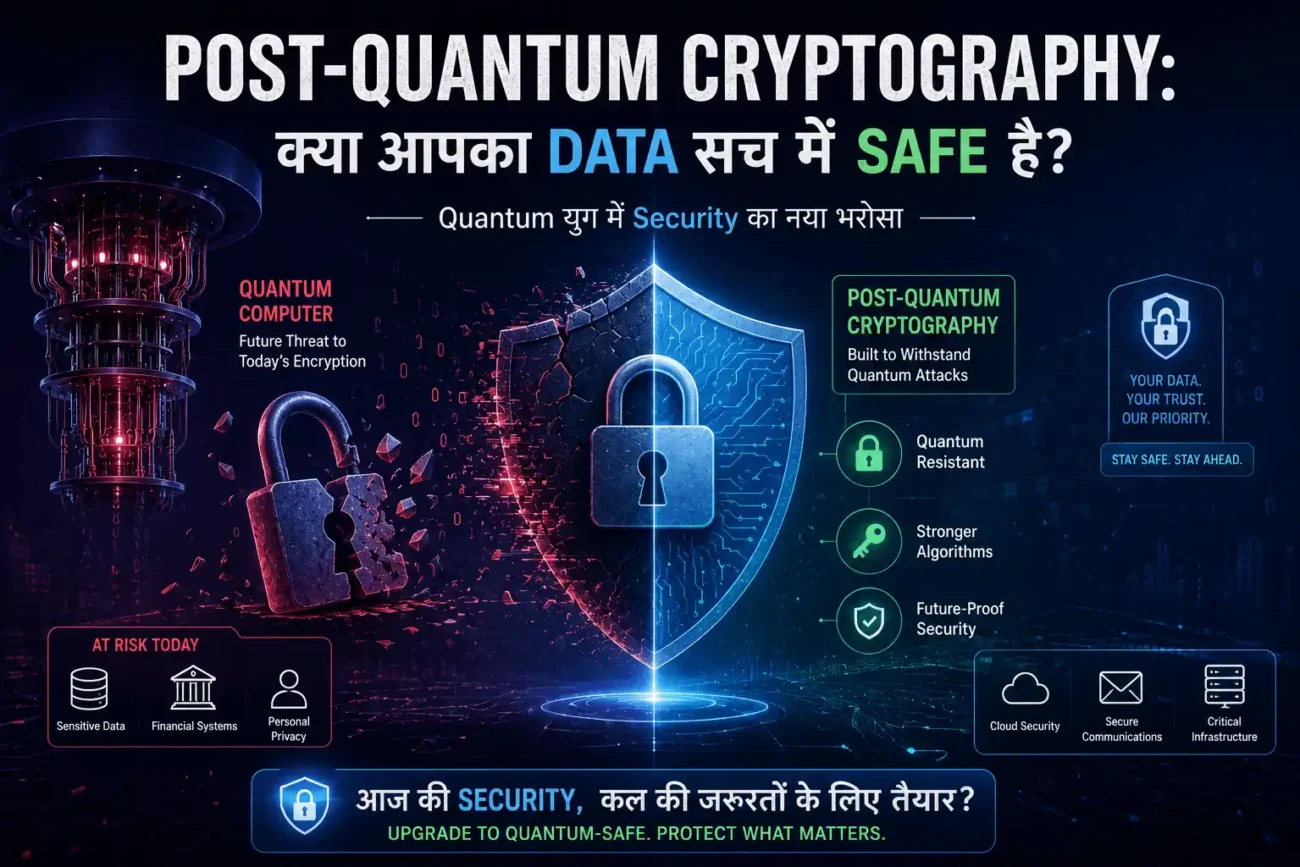
आपका bank account। आपकी WhatsApp chats। आपके Aadhaar और PAN की details। आपके hospital records।यह सब आज encrypted हैं — यानी एक ऐसे mathematical lock से बंद हैं जिसे कोई तोड़ नहीं सकता। लेकिन क्या हो अगर कोई computer इस lock को कुछ ही घंटों में तोड़ दे? यह कोई Hollywood movie का plot नहीं है। यह एक real और आने वाला threat है — जिसका नाम है Quantum Computing। और इस threat से बचाने के लिए scientists ने एक नई technology develop की है — Post-Quantum Cryptography (PQC)।
आज इस article में हम समझेंगे — आपकी current security कितनी strong है, Quantum Computers उसे कैसे तोड़ सकते हैं, PQC क्या है और कैसे काम करती है, और 2026 में आपको क्या करना चाहिए।
यह article थोड़ा serious है — क्योंकि यह topic serious है। लेकिन हम इसे बिल्कुल simple language में समझेंगे।
चलिए शुरू करते हैं।
आज आपका Data कैसे Secure होता है?
Internet पर हर रोज़ अरबों transactions होते हैं। पैसे transfer होते हैं। Passwords भेजे जाते हैं। Private messages send होती हैं।
यह सब secure कैसे रहता है? इसका जवाब है — Encryption।
Encryption एक process है जिसमें आपका data एक mathematical formula की मदद से एक ऐसे format में बदल दिया जाता है जिसे सिर्फ authorized person ही read कर सके।
सबसे popular Encryption — RSA
आज internet की security mostly RSA Encryption पर based है।
RSA कैसे काम करता है? इसे एक example से समझते हैं।
सोचिए दो बहुत बड़े prime numbers लो — जैसे 104,729 और 224,737। इन्हें multiply करना बहुत आसान है। Answer आ जाएगा।
लेकिन अगर मैं आपको सिर्फ वो बड़ा number दूँ और कहूँ — “बताओ यह किन दो prime numbers का product है?” — तो आपको बहुत मुश्किल होगी।
यही RSA का core principle है। Multiplication easy है, factorization hard है।
Real RSA encryption में numbers इतने बड़े होते हैं कि आज का सबसे fast supercomputer उन्हें factor करने में लाखों साल लगाएगा।
इसीलिए आपका bank, आपकी government, आपकी WhatsApp — सब RSA या इसी जैसी encryption use करते हैं।
आपके Phone पर “🔒” का मतलब
जब आप browser में कोई website खोलते हो और address bar में “https://” और एक lock icon दिखता है — इसका मतलब है आपका connection encrypted है।
यह TLS/SSL encryption है — जो भी RSA और similar algorithms पर based है।
तो अभी तक सब safe है। लेकिन problem कहाँ है?
असली Problem — Quantum Computer इसे तोड़ सकता है
2026 में Quantum Computers इतने powerful हो चुके हैं कि scientists seriously चिंतित हैं।
याद करो — Quantum Computer Superposition और Entanglement की वजह से एक साथ लाखों calculations कर सकता है।
Shor’s Algorithm — RSA का दुश्मन
1994 में mathematician Peter Shor ने एक algorithm develop किया — जिसका नाम है Shor’s Algorithm।
यह algorithm quantum computer पर run होता है — और यह वही factorization problem को जो classical computers के लिए लाखों साल का काम है, उसे polynomial time में solve कर देता है।
Simple भाषा में: एक sufficiently powerful Quantum Computer Shor’s Algorithm use करके RSA encryption को तोड़ सकता है।
“Harvest Now, Decrypt Later” — सबसे Scary Threat
यहाँ एक और डरावनी बात है।
कुछ governments और organizations आज से ही encrypted data collect और store कर रहे हैं। क्यों? क्योंकि वो जानते हैं कि जब powerful Quantum Computer आएगा — वो यह पुराना data decrypt कर लेंगे।
इसे कहते हैं “Harvest Now, Decrypt Later” strategy।
इसका मतलब — आपकी आज की encrypted communications, आज का bank transaction data, आज के government records — यह सब future में vulnerable हो सकते हैं।
यही वजह है कि यह threat इतनी seriously ली जा रही है।
Q-Day — वो दिन जिससे सब डरते हैं
Cybersecurity experts एक term use करते हैं — Q-Day।
यह वो hypothetical day है जब Quantum Computers इतने powerful हो जाएंगे कि वो current encryption को practically तोड़ सकेंगे।
Experts का estimate है Q-Day 2030-2035 के बीच आ सकता है। कुछ aggressive estimates 2027-2028 भी कहती हैं।
यानी हमारे पास ज़्यादा समय नहीं है।
Post-Quantum Cryptography क्या है?
यहीं आता है हमारा hero — Post-Quantum Cryptography (PQC)।
PQC वह encryption technology है जो Quantum Computers के attacks से safe रहती है।
इसे “Post-Quantum” इसलिए कहते हैं क्योंकि यह उस era के लिए design की गई है जब Quantum Computers mainstream हो जाएंगे।
PQC कैसे काम करती है?
PQC उन mathematical problems पर based है जो Quantum Computers के लिए भी hard हैं।
RSA जिस problem पर based था (factorization) — वो Quantum Computers के लिए आसान है। तो scientists ने ऐसी problems ढूँढीं जो Quantum Computers भी efficiently solve नहीं कर सकते।
इनमें से main approaches हैं:
1. Lattice-Based Cryptography
Imagine करो एक बहुत high-dimensional space में points का एक जटिल grid (lattice)। इस grid में एक specific point ढूँढना — यह problem Quantum Computers के लिए भी बहुत hard है।
यह आज PQC की सबसे promising approach है। NIST के approved algorithms में से ज़्यादातर lattice-based हैं।
2. Hash-Based Cryptography
यह approach cryptographic hash functions पर based है। Hash functions already quantum-resistant माने जाते हैं — इनपर based signatures बनाना एक reliable PQC approach है।
3. Code-Based Cryptography
Error-correcting codes पर based — यह approach 1970s से exist करती है और बहुत well-studied है।
4. Multivariate Cryptography
Complex polynomial equations के systems पर based — इन्हें solve करना classically और quantum dono के लिए hard है।
NIST ने PQC Standards कब Approve किए?
यह बहुत important update है।
NIST (National Institute of Standards and Technology) — America की government standards body — ने 2024 में officially Post-Quantum Cryptography Standards publish किए।
यह एक historic moment था। 8 साल की evaluation process के बाद तीन main algorithms approved हुए:
| Algorithm | Type | Use Case |
|---|---|---|
| CRYSTALS-Kyber (ML-KEM) | Lattice-based | Key exchange / Encryption |
| CRYSTALS-Dilithium (ML-DSA) | Lattice-based | Digital signatures |
| SPHINCS+ (SLH-DSA) | Hash-based | Digital signatures (backup) |
यह standards अब globally adopt हो रहे हैं। यानी future का internet इन्हीं algorithms पर चलेगा।
Current Encryption vs Post-Quantum Encryption — तुलना
| Factor | RSA / ECC (Current) | Post-Quantum (PQC) |
|---|---|---|
| Classical Computer से safe | ✅ हाँ | ✅ हाँ |
| Quantum Computer से safe | ❌ नहीं | ✅ हाँ |
| Technology maturity | बहुत mature | Relatively नई |
| Performance | Fast | थोड़ा slower (improving) |
| Key size | Smaller | Larger |
| Industry adoption | Universal | Rapidly growing |
| NIST approved | पुराने standards | ✅ 2024 में approved |
| Real-world use | हर जगह | Banks, Govts शुरू कर रहे |
2026 में कौन-कौन PQC Adopt कर रहा है?
यह transition already शुरू हो चुका है।
Tech Giants
Google ने 2023 में ही Chrome browser में CRYSTALS-Kyber को experimental support दी थी। 2026 तक यह default होने की राह पर है।
Apple ने iMessage में PQC-based encryption add की है — जिसे वो “PQ3” कहते हैं। यह दुनिया की पहली mainstream messaging app बनी जिसने PQC adopt किया।
Signal messaging app ने भी 2024 में PQXDH protocol adopt किया — एक hybrid approach जो classical और quantum-safe encryption दोनों combine करती है।
Governments
USA ने federal agencies को mandate किया है कि 2030 तक PQC transition complete करें।
European Union अपनी cybersecurity strategy में PQC को priority दे रही है।
China भी अपने independent PQC algorithms develop कर रही है — यह एक separate geopolitical dimension है।
Banking और Finance
SWIFT (international banking network) और major banks PQC transition planning शुरू कर चुके हैं। Financial data की sensitivity की वजह से यह sector सबसे fast movers में से है।
India और Post-Quantum Cryptography
भारत के लिए यह topic कितना relevant है?
बहुत ज़्यादा।
India का Digital Exposure
- 1.4 billion Aadhaar records — biometric data जो encrypted है
- UPI transactions — हर रोज़ करोड़ों transactions
- DigiLocker — millions of citizens के documents
- BHIM, PhonePe, GPay — financial data
- Government communications — sensitive policy data
यह सब आज RSA जैसी classical encryption से protected है। Q-Day के बाद — यह सब vulnerable।
India क्या कर रहा है?
CERT-In (Computer Emergency Response Team of India) ने organizations को post-quantum readiness assess करने की advisory जारी की है।
National Quantum Mission (₹6,003 crore) में quantum-safe cryptography research भी include है।
IIT और IISc में PQC पर active research हो रही है।
DRDO और ISRO जैसी defense organizations पहले से quantum-safe communication protocols explore कर रही हैं।
लेकिन सच बात यह है — India को अभी और तेज़ी से move करना होगा। USA और EU से हम पीछे हैं।
आपके लिए practically क्या मतलब है?
अब सबसे ज़रूरी सवाल — आम इंसान को यह सब जानकर क्या करना चाहिए?
अभी तुरंत घबराने की ज़रूरत नहीं है
Q-Day अभी नहीं आया है। आपका UPI, WhatsApp, banking — यह सब अभी safe हैं।
लेकिन यह जानना ज़रूरी है कि आप किन apps/services पर depend हो
जो companies और apps जल्दी PQC adopt करेंगी — वो ज़्यादा secure होंगी। यह एक factor बनेगा app choose करने में।
Long-term sensitive data के बारे में सोचो
अगर आप कोई ऐसी information share कर रहे हो जो 10-15 साल तक sensitive रहेगी — medical records, legal documents, financial agreements — तो इसे extra carefully handle करो। “Harvest Now, Decrypt Later” threat real है।
Password और basic security hygiene
Post-Quantum threats से अलग — basic security अभी भी matter करती है। Strong passwords, 2FA, regular updates — यह सब आज भी उतने ही important हैं।
Crypto Agility — Future का सबसे Important Concept
Cybersecurity experts एक term use कर रहे हैं — Crypto Agility।
इसका मतलब है — ऐसे systems design करो जो easily एक encryption algorithm से दूसरे पर switch कर सकें।
यह इसलिए ज़रूरी है क्योंकि:
- PQC algorithms अभी relatively नए हैं
- Future में और vulnerabilities discover हो सकती हैं
- Technology evolve होती रहती है
Smart organizations वो हैं जो अभी से अपने systems को “crypto agile” बना रही हैं — ताकि जब भी ज़रूरत हो, encryption upgrade करना easy हो।
Post-Quantum Cryptography के Challenges
PQC एक perfect solution नहीं है — अभी कुछ challenges हैं।
Performance Overhead
PQC algorithms classical algorithms से थोड़े slower हैं और larger key sizes use करते हैं। यह IoT devices और low-power systems के लिए challenge है।
हालाँकि — researchers इस पर काम कर रहे हैं और हर साल performance improve हो रही है।
Transition Cost
हर organization के लिए existing systems को PQC में migrate करना expensive और time-consuming है। Legacy systems — जो decades पुराने हैं — को upgrade करना particularly hard है।
New Vulnerabilities
PQC algorithms classical computers से safe हैं — लेकिन इनमें अपनी कुछ vulnerabilities हो सकती हैं जो अभी discover नहीं हुई हैं। यही वजह है कि “crypto agility” important है।
Awareness की कमी
दुनिया भर में — खासकर developing countries में — organizations को PQC threat की जानकारी ही नहीं है। यह awareness gap एक बड़ी problem है।
FAQ — आपके मन के सवाल
Q1. क्या मेरी WhatsApp chats अभी safe हैं?
हाँ — अभी के लिए completely safe हैं। WhatsApp end-to-end encryption use करता है जो आज के computers नहीं तोड़ सकते। Signal ने PQC adopt कर ली है, WhatsApp भी इस दिशा में move कर रहा है। लेकिन अगर कोई आपकी chats आज store कर रहा है Q-Day के लिए — वो scenario theoretically possible है, practically बहुत unlikely।
Q2. क्या Quantum Computer हमारे bank accounts hack कर सकता है?
अभी नहीं। Current quantum computers (Google Willow: 1000 qubits) अभी इतने powerful नहीं हैं। लेकिन जब fault-tolerant quantum computers आएंगे — तब RSA-based banking security vulnerable होगी। इसीलिए banks अभी से transition planning कर रहे हैं।
Q3. Post-Quantum और Quantum Cryptography में क्या फर्क है?
यह commonly confused होता है। Quantum Cryptography (जैसे Quantum Key Distribution) quantum physics के principles use करती है — physically unhackable communication के लिए। Post-Quantum Cryptography classical computers पर run होती है — लेकिन ऐसे algorithms use करती है जो quantum computers भी नहीं तोड़ सकते। दोनों अलग technologies हैं।
Q4. क्या VPN use करने से Quantum threat से protection मिलती है?
अभी के लिए VPN sufficient है। लेकिन Q-Day के बाद traditional VPN protocols भी vulnerable होंगे। Future-ready VPN providers पहले से PQC-based protocols integrate कर रहे हैं। VPN choose करते समय PQC support एक factor बनेगा।
Q5. India का Aadhaar data safe है?
UIDAI (Aadhaar authority) अपने systems को regularly upgrade करती है। Officially वो कहती है कि data secure है। लेकिन long-term quantum threat के against readiness — यह publicly disclosed नहीं है। यह एक ऐसा area है जहाँ transparency ज़रूरी है।
Q6. क्या Bitcoin और Cryptocurrency quantum-safe है?
नहीं — यह एक बड़ी concern है। Bitcoin का public key cryptography RSA जैसी classical encryption पर based है। एक powerful quantum computer theoretically Bitcoin wallets को compromise कर सकता है। Crypto community इस problem को “quantum apocalypse” कहती है और solutions पर काम चल रहा है।
निष्कर्ष — Threat Real है, Solution भी Ready है
Post-Quantum Cryptography एक dry technical topic की तरह लग सकती है। लेकिन यह directly आपकी financial security, privacy, और digital life से जुड़ी है।
अच्छी खबर यह है — दुनिया तैयार हो रही है। NIST के standards आ चुके हैं। Apple, Google, Signal पहले से move कर चुके हैं। Banks और governments transition planning कर रही हैं।
बुरी खबर यह है — transition slow है। Q-Day आने से पहले अगर यह transition complete नहीं हुई — तो consequences serious होंगे।
आम इंसान के रूप में आप क्या कर सकते हो?
Aware रहो। जो apps और services PQC adopt करें — उन्हें prefer करो। अपने sensitive data को carefully handle करो। और इस topic पर अपने आसपास के लोगों को inform करो।
क्योंकि Cybersecurity सिर्फ governments और companies की ज़िम्मेदारी नहीं है — यह हम सबकी है।
आपको इस topic के बारे में क्या लगता है — क्या India को PQC transition में और तेज़ी लानी चाहिए? नीचे comment में बताएं! और इस article को share करें — क्योंकि यह जानकारी हर किसी के लिए ज़रूरी है।
RELATED ARTICLES:



One thought on “Post-Quantum Cryptography: क्या आपका Data सच में Safe है?”