
क्या आपने कभी सोचा है — अगर किसी ने आपका चेहरा किसी और की body पर लगाकर एक video बना दिया, और वो video इतनी real लगे कि कोई फर्क ही न पहचान पाए?
यह कोई science fiction नहीं है। यह 2026 की reality है। और इसे Deepfake कहते हैं।
लेकिन सवाल यह है — अगर Deepfakes इतने powerful हो गए हैं, तो हम सच कैसे पहचानें? कैसे पता करें कि कोई photo, video, या audio असली है या AI ने बनाई है?
इसका जवाब है — Digital Provenance। यह एक ऐसी technology है जो हर digital content का “birth certificate” बनाती है।
आज इस article में हम इन सभी सवालों के जवाब देंगे। बिल्कुल simple language में। Real-life examples के साथ। ताकि आप किसी को भी explain कर सकें कि Deepfakes क्या हैं और Digital Provenance कैसे काम करता है।
चलिए शुरू करते हैं!
पहले समझो — Deepfake आखिर होता क्या है?
Deepfake दो शब्दों से बना है — Deep Learning + Fake।
Deep Learning एक AI technique है जिसमें neural networks को बहुत बड़े datasets पर train किया जाता है। और जब इस technique का use किसी की face, voice, या body को fake content में डालने के लिए किया जाता है — तो उसे Deepfake कहते हैं।
सीधे शब्दों में: Deepfake वह AI-generated content है जो किसी real person को ऐसी बात कहते, ऐसा काम करते दिखाता है जो उसने कभी किया ही नहीं।
Deepfake कितनी तरह के होते हैं?
Deepfakes सिर्फ video तक सीमित नहीं हैं। 2026 में इनके कई रूप हैं:
- Face Swap Deepfakes: किसी की face दूसरे person की body पर — यह सबसे common है
- Voice Cloning (Audio Deepfakes): सिर्फ 3-5 seconds की audio clip से किसी की आवाज़ clone करना
- Lip Sync Deepfakes: किसी existing video में lips को नई audio के साथ sync करना
- Full Body Deepfakes: पूरी body movements और gestures को recreate करना
- Text-to-Video Deepfakes: सिर्फ text prompt लिखो और AI पूरा realistic video बना देगा
- Real-Time Deepfakes: Live video calls (Zoom, Teams) में real-time face swap — यह 2026 का सबसे खतरनाक trend है
Real-Time Deepfakes — 2026 का सबसे बड़ा खतरा
पहले deepfake बनाने में घंटों लगते थे। अब real-time deepfake tools available हैं।
सोचिए — कोई आपके boss का चेहरा लगाकर Zoom call पर आपसे बात करे। आवाज़ भी वही। चेहरा भी वही। आप कैसे पहचानोगे?
2025-2026 में ऐसे cases बहुत बढ़े हैं:
- Hong Kong का $25 Million Scam: एक company के employee को deepfake video call पर CFO बनकर बुलाया गया। उसने $25 million transfer कर दिए — क्योंकि video call पर सब कुछ real लग रहा था।
- Election Misinformation: कई देशों में politicians के fake videos viral हुए जिनमें वो ऐसी बातें कह रहे थे जो उन्होंने कभी कही ही नहीं।
- Voice Cloning Frauds: India में ही कई cases आए जहाँ family members की आवाज़ clone करके पैसे माँगे गए।
यही वजह है कि Deepfake अब सिर्फ entertainment नहीं — यह एक national security concern बन चुका है।
Digital Provenance क्या है? — Content का “Birth Certificate”
अब आते हैं असली solution पर — Digital Provenance।
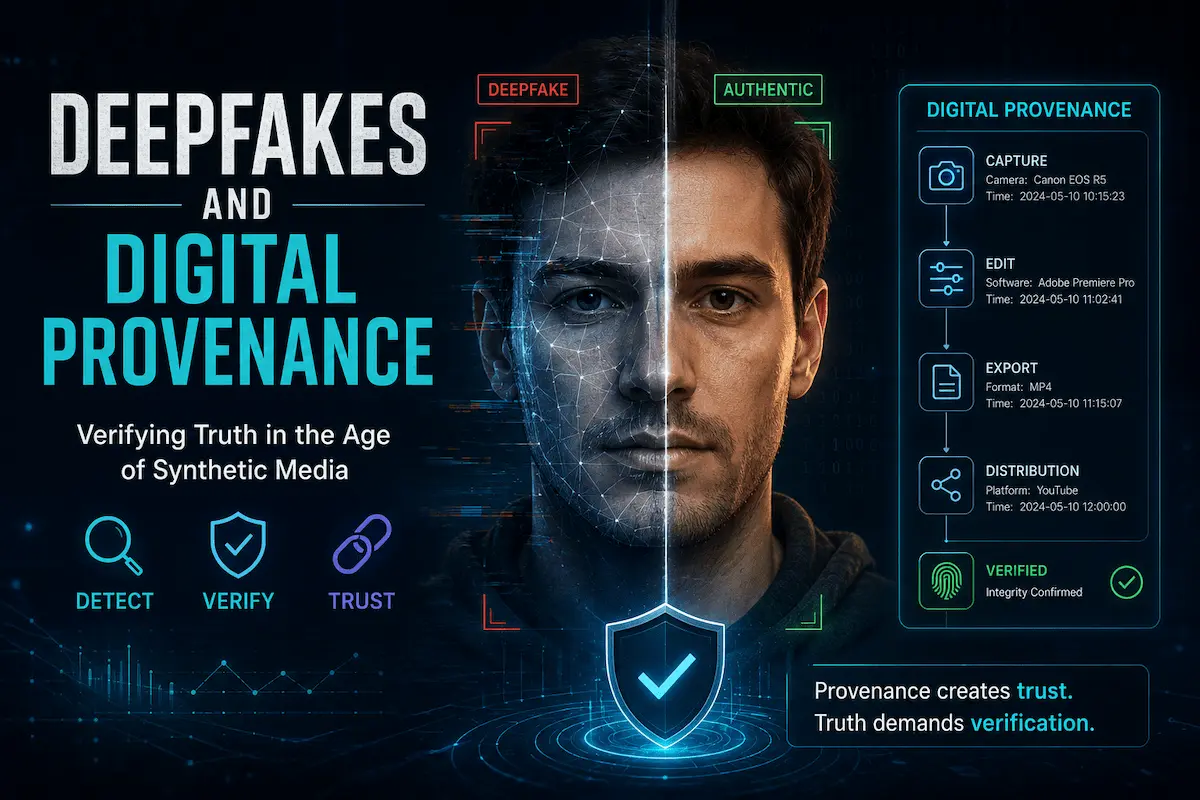
Digital Provenance का मतलब है — किसी भी digital content (photo, video, audio, document) का verified origin और history track करना।
Simple example: जैसे हर इंसान का birth certificate होता है जिसमें लिखा होता है — कब पैदा हुआ, कहाँ पैदा हुआ, माता-पिता कौन हैं। बिल्कुल वैसे ही, Digital Provenance हर digital file का एक “birth certificate” बनाता है।
इसमें record होता है:
- कब बनाया गया — exact date और time
- किसने बनाया — किस device या software से
- कैसे बनाया — AI use हुई या नहीं
- बाद में क्या changes हुए — crop, edit, filter, या कोई modification
- Chain of Custody — file किन-किन हाथों से गुज़री
Digital Provenance Detection से कैसे अलग है?
यहाँ एक बहुत important बात समझना ज़रूरी है।
Detection और Provenance दो अलग चीज़ें हैं:
| Feature | Detection (पहचान) | Provenance (उत्पत्ति) |
|---|---|---|
| काम क्या करता है | Content analyze करके बताता है “यह fake है या real” | Content का verified origin और history बताता है |
| कब काम करता है | Content बनने के बाद | Content बनने के समय से |
| Accuracy | AI vs AI — arms race, 100% guaranteed नहीं | Cryptographic proof — tamper-proof |
| Limitation | नई AI techniques से बेवकूफ बनाया जा सकता है | अगर content creator ने provenance add नहीं किया — तो record नहीं होगा |
| Example | “यह photo AI-generated लगती है” | “यह photo iPhone 17 से, Delhi में, 29 May 2026 को खींची गई” |
सबसे important line: Detection एक “guess” है — Provenance एक “proof” है।
इसीलिए 2026 में experts कहते हैं — सिर्फ detection पर depend मत करो। Provenance को adopt करो।
C2PA Standard — Digital Provenance का Global Standard
अब सबसे बड़ा सवाल — Digital Provenance technically काम कैसे करता है?
इसका जवाब है C2PA — Coalition for Content Provenance and Authenticity।
C2PA एक open technical standard है जो दुनिया की सबसे बड़ी tech companies ने मिलकर बनाया है।
C2PA बनाने वाले कौन हैं?
- Adobe — Photoshop, Premiere Pro
- Microsoft — Windows, Bing
- Google — Chrome, Search, Gemini
- Intel — Hardware chips
- Sony — Cameras
- Nikon — Cameras
- Canon — Cameras
- BBC — News
- Meta — Facebook, Instagram
- TikTok — Short videos
जब इतनी बड़ी companies एक standard पर agree करें — तो समझ जाओ कि बात serious है।
C2PA काम कैसे करता है?
C2PA एक Content Credential embed करता है — हर digital file के अंदर। यह credential cryptographically signed होता है। इसे कोई secretly modify नहीं कर सकता।
Step by step process:
- Creation: जब आप किसी C2PA-enabled camera (जैसे Sony α1, Nikon Z9) से photo खींचते हो — camera automatically एक Content Credential बनाता है। इसमें record होता है: device name, location, timestamp, lens info।
- Editing: जब आप उस photo को Adobe Photoshop में edit करते हो — Photoshop एक नया credential layer add करता है। इसमें record होता है: क्या changes किए, कब किए, किसने किए।
- AI Involvement: अगर AI tools use हुए (जैसे Generative Fill) — तो वह भी record होता है।
- Publishing: जब photo publish होती है — reader Content Credential check कर सकता है। पूरी history transparent है।
सोचिए — यह बिल्कुल वैसा है जैसे एक passport में stamps लगते जाते हैं। हर country का entry stamp दिखाता है — कब आए, कहाँ गए। Content Credential भी ऐसे ही काम करता है।
C2PA क्या नहीं करता?
यहाँ एक बात clear कर दें — C2PA कोई deepfake detector नहीं है।
C2PA यह नहीं बताता कि content “fake है या real”। यह सिर्फ बताता है कि content कहाँ से आया और उसके साथ क्या हुआ।
अगर किसी content पर C2PA credential नहीं है — इसका मतलब यह नहीं कि वह fake है। इसका सिर्फ मतलब है कि उसका verified provenance record available नहीं है।
SynthID — Google DeepMind का Invisible Watermark
C2PA के अलावा एक और powerful technology है — SynthID।
SynthID को Google DeepMind ने develop किया है। यह AI-generated content में invisible watermarks embed करता है।
यह कैसे काम करता है?
- जब कोई AI tool (जैसे Google Gemini, Imagen) content generate करता है — SynthID एक imperceptible signal embed करता है
- यह signal human eye को दिखाई नहीं देता — लेकिन machines पढ़ सकती हैं
- यह signal इतना robust है कि screenshot लेने, crop करने, compress करने, या resize करने के बाद भी survive करता है
SynthID vs C2PA — क्या फर्क है?
| Feature | C2PA (Content Credentials) | SynthID (Invisible Watermark) |
|---|---|---|
| कैसे काम करता है | Metadata embed करता है file में | Invisible signal embed करता है content में |
| किसने बनाया | Adobe, Microsoft, Google (coalition) | Google DeepMind |
| Strip करना | Metadata हटाना possible है (लेकिन tamper-evident) | Signal हटाना बेहद मुश्किल — content में ही embedded है |
| Compression के बाद | Metadata हट सकता है | Signal survive करता है |
| Purpose | Origin और history track करना | AI-generated content identify करना |
| Integration | Cameras, software, platforms | Google ecosystem (Search, Chrome, Gemini, Lens) |
Best approach: दोनों को साथ use करो। C2PA origin track करता है, SynthID AI involvement identify करता है।
2026 का Deepfake Detection Stack — तीन Layers की रक्षा
2026 में experts एक multi-layered defense strategy recommend करते हैं। सिर्फ एक tool पर depend करना खतरनाक है।
Layer 1 — Provenance Verification (C2PA Check)
सबसे पहले check करो — content पर Content Credentials हैं या नहीं।
अगर हैं — तो verify करो कि credentials valid हैं। Origin कहाँ है। AI involvement है या नहीं।
अगर नहीं हैं — तो यह एक red flag है। Skeptical रहो। आगे की layers पर जाओ।
Layer 2 — AI Forensic Analysis (Risk Score)
दूसरी layer में AI-powered forensic tools content को analyze करते हैं:
- Pixel Analysis: Skin texture, lighting consistency, shadow direction check करना
- Audio Analysis: Voice patterns, breathing patterns, background noise consistency
- Facial Micro-expressions: Natural expressions vs AI-generated expressions
- Temporal Analysis: Video frames के बीच consistency check करना
- Acoustic Signatures: Audio में hidden artifacts detect करना
ये tools content को एक “Risk Score” देते हैं — जितना high score, उतना ज़्यादा chance कि content manipulated है।
Layer 3 — Human Escalation (Expert Review)
तीसरी layer में — जब automated tools inconclusive हों — content human experts को भेजा जाता है।
Critical decisions (जैसे news publishing, legal evidence, financial transactions) में यह layer ज़रूरी है।
सोचिए — यह बिल्कुल वैसा है जैसे airport security में तीन layers होती हैं। पहले X-ray machine (Provenance), फिर metal detector (AI Analysis), फिर manual checking (Human Review)। तीनों मिलकर security complete करती हैं।
2026 के Top Deepfake Detection Tools
अब देखते हैं 2026 में कौन-कौन से tools available हैं:
| Tool | Company | खासियत | Best For |
|---|---|---|---|
| Content Credentials Verify | Adobe (contentcredentials.org) | C2PA credentials check करता है — free | Journalists, creators |
| SynthID | Google DeepMind | AI-generated content detect करता है — Google ecosystem integrated | General users |
| Reality Defender | Reality Defender Inc. | Enterprise-grade multi-modal detection (video + audio + image) | Enterprises, Government |
| Deepidv | Deepidv | C2PA + forensic analysis combined platform | Businesses |
| Pindrop | Pindrop | Voice deepfake detection — call centers ke liye | Banks, call centers |
| Sensity AI | Sensity | Visual deepfake detection — KYC/identity verification | Financial institutions |
| UncovAI | UncovAI | Multi-modal forensic analysis platform | Media companies |
| Google Search/Lens | C2PA verification + SynthID built into Search, Chrome, Lens | Everyone |
Note: कोई भी single tool 100% accurate नहीं है। इसीलिए multi-layered approach ज़रूरी है।
EU AI Act 2026 — Government Level पर कार्रवाई
Deepfakes सिर्फ एक technology problem नहीं है — यह एक regulatory challenge भी है।
August 2026 से EU AI Act fully effective हो रहा है। यह दुनिया का पहला comprehensive AI regulation है।
EU AI Act में Deepfakes के लिए क्या Rules हैं?
- Mandatory Labeling: AI-generated content पर clearly label लगाना अनिवार्य है
- Transparency Requirement: AI systems को disclose करना होगा कि content AI-generated है
- C2PA Adoption: EU ने C2PA standard को transparency requirements meet करने के लिए recommend किया है
- Penalties: Rules तोड़ने पर €35 million या global turnover का 7% तक fine
India में क्या हो रहा है?
India में अभी deepfake-specific law नहीं है। लेकिन कुछ developments हो रहे हैं:
- IT Act Section 66D: Impersonation using computer resource — punishment up to 3 years
- Bhartiya Nyaya Sanhita (BNS): Defamation और identity fraud provisions deepfakes पर apply हो सकते हैं
- MEITY Advisory (2024): Government ने platforms को deepfake content remove करने की advisory जारी की
- Proposed Digital India Act: इसमें AI-generated content के लिए specific provisions expected हैं
हालाँकि — India को EU जैसा comprehensive framework अभी बनाना बाकी है। यह ज़रूरी है क्योंकि India दुनिया का सबसे बड़ा internet user base है — 900 million+ users।
आप Deepfake कैसे पहचानें? — Practical Guide
अब सबसे practical हिस्सा — आप personally deepfake कैसे detect करें?
Visual Clues (आँखों से देखो)
- Eyes: Blinking pattern unnatural है? दोनों eyes का reflection अलग है?
- Skin Texture: Skin बहुत smooth या “plasticky” लगती है?
- Hair: Hair strands individual दिख रहे हैं या एक blur mass है?
- Ears/Jewelry: Earrings, glasses — दोनों sides symmetric हैं?
- Teeth: Teeth बहुत uniform दिख रहे हैं? Natural teeth slightly uneven होते हैं
- Background: Background blur या distorted है? Edges पर artifacts हैं?
- Lip Sync: Audio और lip movement exactly match कर रहे हैं? Slight delay है?
Audio Clues (कानों से सुनो)
- Breathing: Natural breathing pattern है? AI voices में breathing gaps missing होते हैं
- Background Noise: Background noise suddenly cut होती है?
- Emotional Consistency: Voice में emotional variation natural है?
- Pronunciation: Unusual pronunciation या robotic tone?
Technical Steps (Tools से check करो)
- Content Credentials Check: contentcredentials.org पर file upload करो — C2PA credentials check होंगी
- Reverse Image Search: Google Lens या TinEye पर image search करो — original source मिल सकता है
- Google “About this image”: Google Search में image search करो — “About this image” feature provenance information दिखाएगा
- Source Verification: Content किस account/website से आया है? Verified है?
- Cross-Reference: Same news/event दूसरे reliable sources पर भी है?
सबसे Important Rule
“जब शक हो — शक करो।”
2026 में experts “Zero Trust for Digital Media” recommend करते हैं। इसका मतलब — किसी भी digital content को automatically सच मत मानो। पहले verify करो।
Deepfake Technology के Positive Uses — सिर्फ बुरा नहीं है!
यहाँ एक fair point बनाना ज़रूरी है। Deepfake technology हमेशा बुरी नहीं होती। इसके कई positive uses भी हैं:
1. Film और Entertainment Industry
Hollywood में actors को young दिखाना, deceased actors को screen पर लाना, dubbing में lip sync improve करना — यह सब deepfake technology से possible है।
उदाहरण: Marvel movies में de-aging effects, या Indian cinema में language dubbing improvement।
2. Education और Training
Historical figures को “जीवित” करके interactive learning experience बनाना। Medical training में realistic patient simulations बनाना।
3. Accessibility
Speech-impaired लोगों के लिए voice synthesis। Sign language को speech में convert करना।
4. Privacy Protection
Whistleblowers और witnesses की identity protect करने के लिए face replacement।
लेकिन — positive uses के लिए भी transparency ज़रूरी है। इसीलिए C2PA और Content Credentials matter करते हैं — ताकि हमेशा clear रहे कि content AI-generated है।
भविष्य क्या है? — 2026 से आगे
Deepfakes और Digital Provenance दोनों तेज़ी से evolve हो रहे हैं। आने वाले सालों में यह trends देखने को मिलेंगे:
- Hardware-Level Provenance: नए smartphones और cameras में C2PA chip-level पर integrated होगा। Google Pixel, Sony, Canon — सभी ने शुरू कर दिया है।
- Browser-Level Verification: Chrome, Edge, Firefox — सभी browsers Content Credentials natively verify करेंगे। अलग tool की ज़रूरत नहीं होगी।
- Social Media Integration: Instagram, YouTube, TikTok — सभी platforms AI-generated content को automatically label करेंगे।
- Real-Time Detection Improvement: Live video calls में deepfake detection और better होगा।
- Global Regulation: EU AI Act के बाद अन्य देश भी similar laws लाएंगे। India का Digital India Act इसी direction में है।
FAQ — आपके मन के सवाल
Q1. क्या Deepfake बनाना illegal है?
Directly नहीं — लेकिन इसका misuse illegal है। अगर आपने deepfake बनाकर किसी को defame किया, fraud किया, या harassment किया — तो यह IT Act, BNS, और copyright laws के under punishable है। EU AI Act 2026 से AI-generated content labeling mandatory है।
Q2. क्या कोई free tool है जिससे Deepfake check कर सकते हैं?
हाँ। Adobe का Content Credentials Verify tool (contentcredentials.org) free है। Google Search और Google Lens में भी “About this image” feature free है। इसके अलावा, कई research institutions free detection tools provide करती हैं।
Q3. C2PA credential strip हो सकता है क्या?
Technically हाँ — metadata strip करना possible है। लेकिन C2PA tamper-evident है — अगर credential हटाई या modify की गई, तो verification fail हो जाएगा। और credential missing होना itself एक red flag है।
Q4. SynthID और C2PA में कौन बेहतर है?
दोनों अलग-अलग purpose serve करते हैं और complement करते हैं। C2PA origin track करता है, SynthID AI involvement identify करता है। Best approach — दोनों साथ use करो।
Q5. क्या AI-generated text भी detect हो सकता है?
हाँ, लेकिन यह images/videos से ज़्यादा challenging है। Tools जैसे GPTZero, Originality.ai exist करते हैं, लेकिन accuracy 100% नहीं है। SynthID अब text watermarking में भी use हो रहा है।
Q6. India में deepfake victim हूँ — क्या करूँ?
तुरंत Cyber Crime Portal (cybercrime.gov.in) पर complaint करें। IT Act Section 66D (impersonation) और 67 (obscene content) के under action possible है। Local police station में भी FIR करें। Evidence (screenshots, URLs) ज़रूर preserve करें।
निष्कर्ष — सच पहचानना अब एक Skill है
Deepfake technology ने दुनिया बदल दी है। अब “seeing is believing” — यह कहावत पुरानी हो चुकी है। “Verifying is believing” — यह 2026 का नया rule है।
Digital Provenance — C2PA, Content Credentials, SynthID — यह सब tools हमें power दे रहे हैं कि हम सच और झूठ में फर्क कर सकें।
लेकिन technology अकेली काफी नहीं है। Digital Literacy ज़रूरी है। हर internet user को यह skills सीखनी चाहिए:
- Content verify करना
- Source check करना
- Emotional manipulation से बचना
- “Too good to be true” content पर शक करना
जैसे हमने traffic rules सीखे ताकि सड़कों पर safe रहें — वैसे ही अब digital media rules सीखने का वक़्त है।
तो आज ही शुरू करो। contentcredentials.org पर जाओ। अगली बार कोई viral video देखो — पहले verify करो। यह आपकी ज़िम्मेदारी है — और आपकी superpower भी।
आपको Deepfake detection में सबसे ज़्यादा किस चीज़ की चिंता है? नीचे comment करें! और इस article को उन दोस्तों के साथ share करें जो Science और Technology से प्यार करते हैं।
RELATED ARTICLES: